
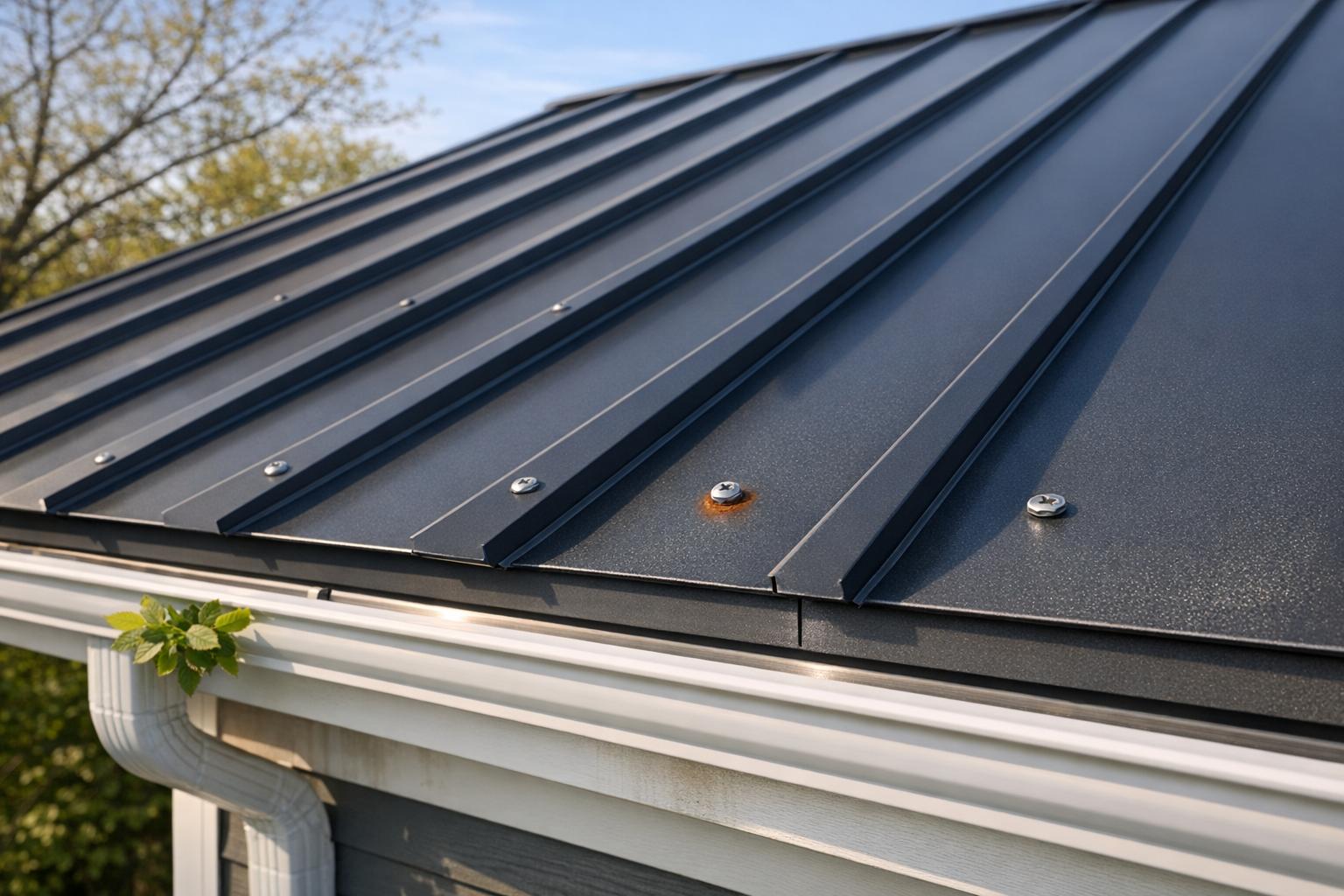
Spring Roof Inspection Checklist: Protect Your Metal Roof
Spring is the ideal time to inspect your metal roof for winter damage. Freezing, thawing, and debris buildup can create hidden problems that worsen over time. A thorough inspection now can save you from expensive repairs later.
Here’s what to check:
- Roof Panels: Look for dents, scratches, rust, and misaligned panels.
- Fasteners & Seams: Tighten loose screws and check for gaps or peeling sealant.
- Paint & Coatings: Address flaking or fading to prevent UV and corrosion damage.
- Gutters & Downspouts: Clear debris and ensure proper water flow.
- Flashing & Sealants: Inspect areas around chimneys, vents, and skylights for cracks or gaps.
- Interior Issues: Check your attic for water stains, mold, or light penetration.
If you notice sagging, widespread rust, or recurring leaks, consult a professional. Regular maintenance extends your roof’s lifespan and protects your home.
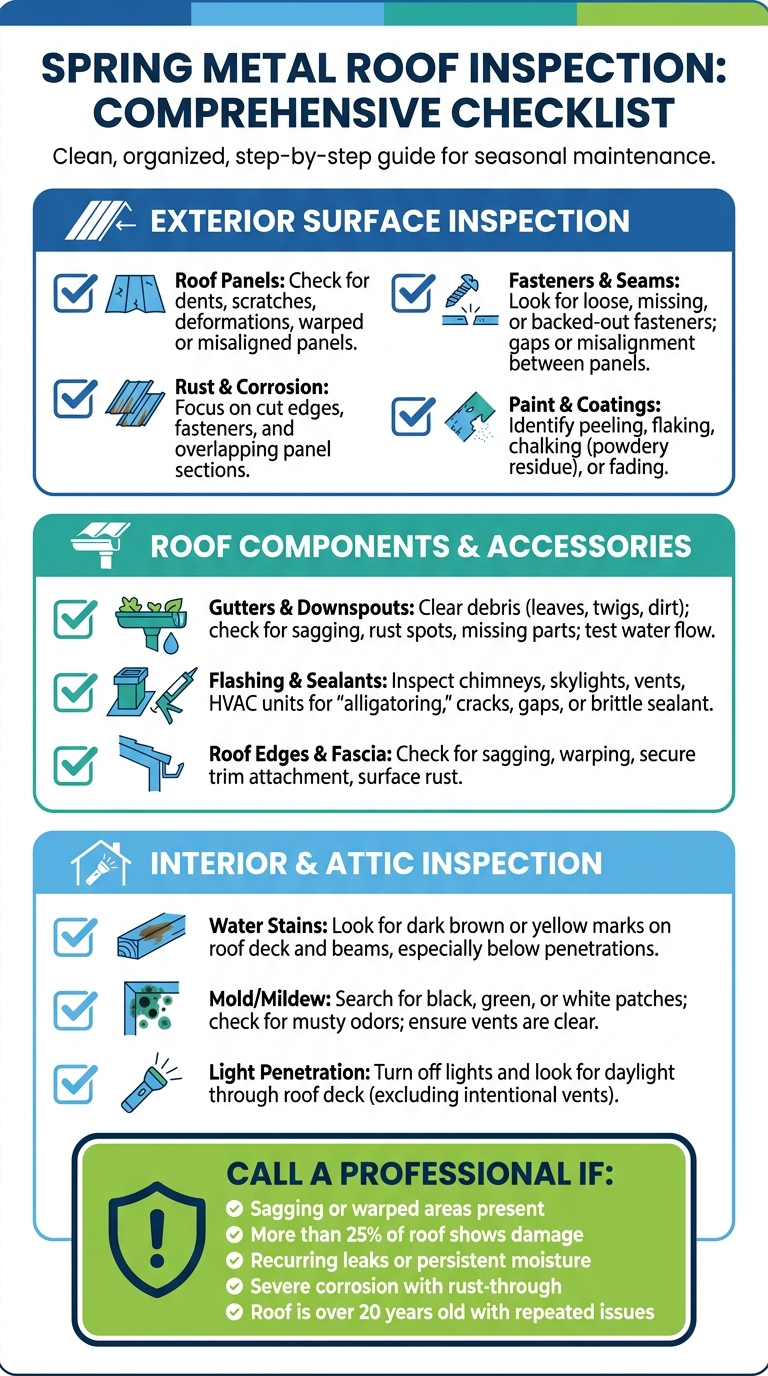
Spring Metal Roof Inspection Checklist: Complete Guide
Exterior Surface Inspection Checklist
Take a close look at your metal roof's exterior from the safety of ground level using binoculars. This approach helps you quickly spot any discoloration or damage while avoiding unnecessary trips onto the roof. Once you've identified potential problem areas, use the checklist below to ensure a thorough inspection of your roof's exterior.
Inspect Roof Panels for Damage
Look for signs of dents, scratches, or deformations caused by falling debris, hail, or ice. Winter weather often leaves visible marks that can weaken your roof's protective layers. Pay attention to warped or misaligned panels, as these might point to underlying structural issues. If you need to step onto the roof, only walk on the lower third of each panel to minimize the risk of causing new dents.
Check for Rust, Corrosion, and Oxidation
Focus on areas like cut edges, fasteners, and overlapping panel sections, as these spots are most prone to rust. Metal can oxidize quickly when its protective coating is compromised. Joseph Elshazly, President and CMO of Rapid Restoration Group, emphasizes the importance of monitoring for rust, stating, "watch for rust on metal flashings or peeling sealant, as these can lead to more significant problems if left unaddressed". If you notice rust, document it with photos to track its progression and address it promptly by cleaning the area and applying a protective coating approved by the manufacturer.
Examine Fasteners and Seams
Seasonal temperature changes can loosen screws and shift seams. Inspect for loose, missing, or backed-out fasteners, which are common after winter's freeze-thaw cycles. If screws are loose, use a drill with adjustable torque to tighten them carefully - over-tightening can damage washers or strip the holes. Check seams for gaps, misalignment, or separation between panels, and inspect the surrounding sealant for signs of cracking or peeling.
Assess Paint and Coating Condition
The roof's coating serves as a barrier against UV damage and corrosion. Look out for peeling, flaking, or chalking - a powdery residue that signals UV degradation. Fading paint can also indicate the breakdown of the protective layer. As Top Tier Metals notes, "minor surface damage can compromise the roof's protective coatings if left untreated". Addressing these issues early helps prevent further deterioration and extends the life of your roof.
sbb-itb-e33e3b1
Roof Components and Accessories Checklist
After inspecting the roof panels, it’s time to assess the supporting components that help direct water away from your home. These parts of your metal roof system work together to shield vulnerable areas from potential leaks. Winter’s freeze-thaw cycles can take a toll on these elements, often making them some of the first to show wear.
Inspect Gutters and Downspouts
Start by checking for debris like leaves, twigs, and dirt that may have built up over the winter months. This debris can trap moisture against your roof, causing water to flow backward beneath the panels. According to LA Roofing Materials, "problems like clogs or damage to the gutter and downspout allow water to flow back to the roof and may result in leaks and damages". Look for sagging sections, rust spots, or missing parts, and test the system by running water through it with a garden hose. Water should flow freely through the downspouts without pooling or overflowing.
When cleaning gutters, work from the top down to avoid streaking dirt onto lower panels. Also, confirm that downspouts direct water far enough away from your home’s foundation to prevent moisture buildup in your basement.
Evaluate Flashing and Sealants
Pay close attention to areas where the roof has penetrations, such as chimneys, skylights, plumbing vents, and HVAC units. These spots are particularly prone to flashing failure. Watch for signs of "alligatoring", which indicates that the sealant has significantly degraded. If the sealant crumbles or feels brittle when pressed, it’s time to replace it.
Check that the flashing overlaps correctly, with upper pieces covering lower ones in a shingle-like fashion to ensure proper water shedding. Rust streaks can help you trace potential moisture issues, so don’t ignore them. If you find cracks or gaps, reseal them using a roofing sealant that matches your manufacturer’s recommendations. Finally, inspect the edges of the roof to ensure they remain structurally sound.
Check Roof Edges and Fascia
As part of your exterior inspection, examine the roof’s perimeter for signs of sagging or warping. These issues might point to hidden structural problems or damage to the roof deck. A secure roof perimeter is vital for maintaining safety and comfort.
Ensure gable, eave, and rake trims are firmly attached and that their sealant remains intact. Pay special attention to the roof edge trim, as these areas are particularly vulnerable to wind damage. If you notice surface rust on metal flashings or at cut edges near the fascia, clean it immediately and apply a protective coating to stop it from spreading further.
Interior and Attic Inspection Checklist
Even if the exterior of your metal roof looks flawless, there could be hidden problems lurking inside your home. Your attic often holds the first clues of damage that might not be visible from the outside. After inspecting the roof's exterior, it’s time to shift your focus indoors. Use a flashlight on a sunny day to thoroughly examine your attic during your spring inspection.
Look for Water Stains or Moisture
Start by examining the underside of the roof deck and support beams for discoloration or damp spots. Water stains often appear as dark brown or yellow marks, signaling moisture intrusion. Pay extra attention to areas below roof penetrations like chimneys, vents, and skylights, as these are common entry points for water. Also, check for dampness or warping on wooden surfaces, which could indicate ongoing water issues.
Inspect for Mold or Mildew Growth
Search for mold or mildew, which can appear as black, green, or white patches. A musty odor is another telltale sign of water spillage or persistent moisture problems. According to LA Roofing Materials, "Appropriate ventilation ensures that there is little moisture in the attic, which, in turn, reduces the case of mold and mildew". Make sure soffit, ridge, and gable vents are clear to maintain proper airflow. Blocked vents can lead to higher humidity levels that encourage mold growth. If you find widespread mold or notice sagging and warped beams, it’s a good idea to consult a roofing professional to evaluate your roof’s condition.
Check for Light Penetration
Turn off all interior lights and look for any daylight streaming through the roof deck. As LA Roofing Materials explains, "If you use the shingle roof inspection checklist, look for signs of daylight coming through the roof boards since this is a blatant sign that some of the roof shingles are missing or badly damaged". While some light might come through intentional ventilation openings, seeing light through the solid roof deck or near roof penetrations suggests potential damage. Focus on areas beneath chimneys, vents, and skylights, as these are common spots for seal failures. Also, keep an eye out for uneven roof planes or sagging, as these could point to structural issues beneath the surface.
When to Call a Professional
Spring inspections often uncover problems that need the attention of a roofing contractor. Acting promptly when issues arise can prevent expensive structural damage and help keep your metal roof in top condition for years to come. Signs from both your interior and exterior checks can help determine when it’s time to bring in a professional. For example, interior issues like water stains or mold are red flags that demand immediate expert evaluation.
Signs of Severe Damage or Structural Issues
Noticeable problems like sagging or warped areas on your roof are strong indicators that the roof deck or support beams may be compromised. Other warning signs include uneven roof planes, dips along the edges, loose panels, damaged seams, or gaps caused by building movement. These issues require professional attention to avoid further damage. In cases where more than 25% of the roof is affected, a full replacement is often more cost-effective than repairs. As Joseph Elshazly, President and Chief Marketing Officer of Rapid Restoration Group, puts it:
"If more than a quarter of your roof shows damage, it might be smarter to replace it entirely rather than patching it up"
Severe corrosion that leads to "rust-through" also requires professional repairs, as it compromises the roof's ability to shed water effectively.
Leaks That Need Immediate Attention
Persistent leaks are another major sign that your roof is in trouble and needs professional assessment.
"If you're repairing leaks often, your roof's probably on its last leg", warns Joseph Elshazly
Interior signs like ceiling discoloration, musty odors, or mold in the attic point to water intrusion that could already be causing structural damage. Externally, rust on metal flashings or peeling sealants around chimneys, skylights, and vents are common entry points for water that require expert resealing. If your roof is over 20 years old and experiencing repeated leaks, a full replacement may be necessary to protect your home’s integrity.
Benefits of Professional Inspections
Professional inspections, like those offered by CAP Metal Build, can identify subtle but critical issues that often go unnoticed. Experts ensure repair materials match your existing roof to avoid weakening the structure or creating uneven surfaces. They are trained to detect early signs of structural failure and carefully check areas like flashings to ensure proper sealing. Additionally, professional inspections confirm that your roof complies with building codes and secure any necessary permits, which helps protect your insurance coverage and safety. Most importantly, these assessments can catch small leaks before they escalate into significant problems, preserving your home and your investment.
Conclusion
Taking care of your home in spring includes looking after your metal roof, which helps it last longer and stay in good condition. Regular inspections are key to spotting loose panels, damaged seams, or early rust - letting you fix small problems before they become expensive repairs. By following this checklist and seeking expert advice when needed, you can ensure your roof stays in great shape.
Check your roof twice a year - once in spring and again in fall. This routine helps you inspect all parts of the roof, examine flashing around chimneys and vents, and catch moisture issues that could weaken the structure of your home. If more than 25% of your roof is damaged, replacing it might be a better choice than repairing it.
While homeowners can handle many inspection tasks, knowing when to call a professional is essential. If you see sagging areas, ongoing leaks, or heavy corrosion, it’s time to bring in experts. Services like CAP Metal Build offer thorough inspections to spot hidden problems and keep your roof strong and reliable for years to come.
Don’t wait for water damage, mold, or structural issues to arise. Regular maintenance and timely inspections can help your metal roof protect your home for 40–60 years.
FAQs
Is it safe to walk on a metal roof?
Walking on a metal roof can be done safely with the right precautions, but it largely depends on the roof's design and current condition. While metal roofs are built to last, stepping in the wrong spots can lead to dents or other damage. To minimize risks, avoid walking on seams or fasteners and be mindful of potentially slippery surfaces. If you're unsure about the roof's stability or your ability to navigate it safely, it's better to inspect it from a secure position or reach out to a professional for help.
Which rust spots should I be most concerned about?
Focus on rust spots that show extensive corrosion, particularly in areas where moisture is common or paint has peeled away. If left untreated, these spots can compromise the structural strength of your metal roof over time. Addressing them quickly is key to preventing further damage.
When is roof repair not worth it?
If more than 25% of your roof's surface requires repairs, fixing it may not be the best option. In these situations, replacing the entire roof is often a smarter choice. It can save you money in the long run and provide better durability compared to extensive patchwork.