
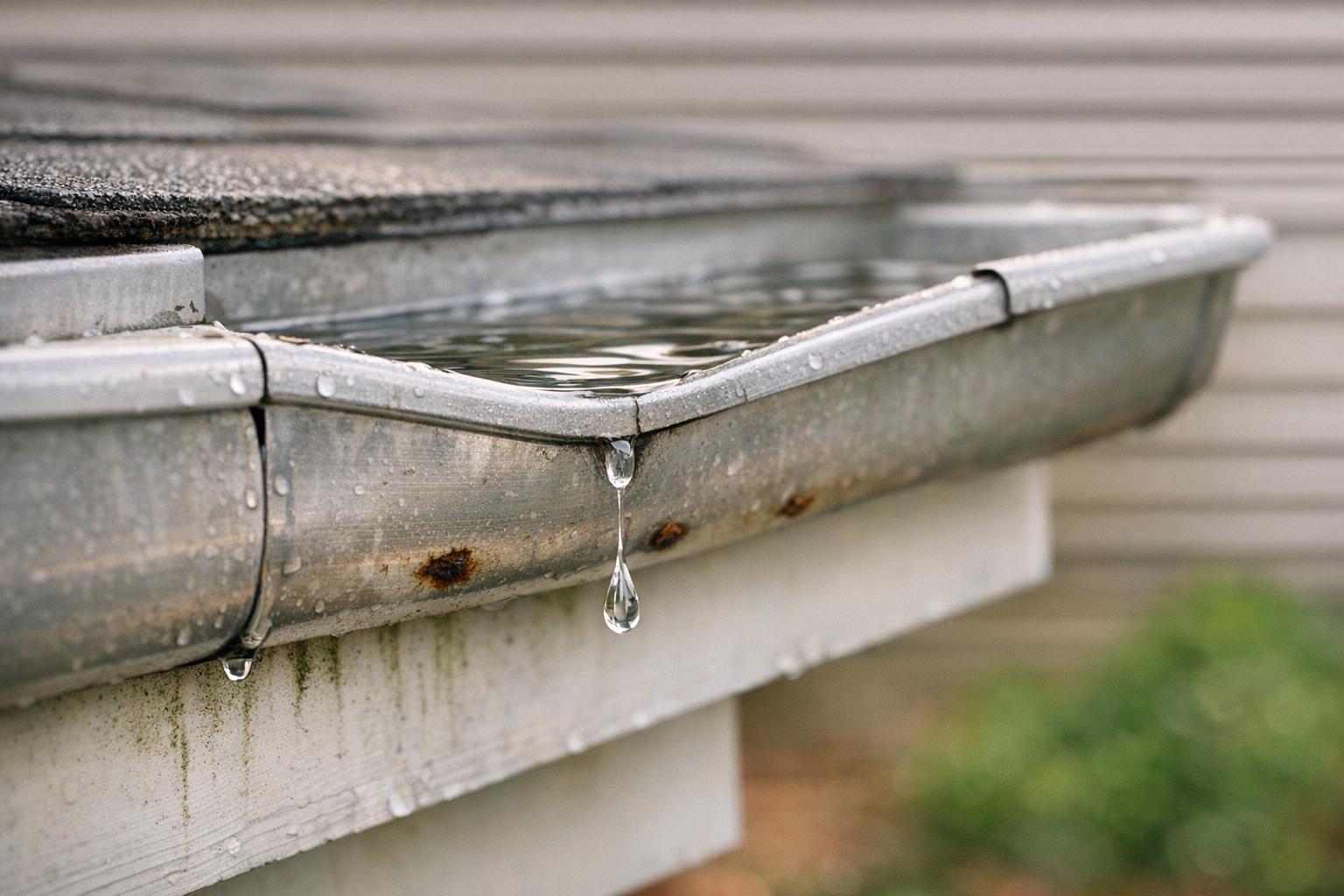
Gutters protect your home by channeling rainwater away from the foundation and walls. When they fail, the damage can include foundation cracks, basement flooding, and mold. Common signs your gutters need replacement include:
- Cracks or splits: Water leaks through, causing soil erosion and structural damage.
- Peeling paint or rust: Indicates water is pooling, leading to corrosion and leaks.
- Sagging gutters: Excess weight from debris or poor installation causes detachment.
- Pooling water near the foundation: Leads to soil erosion and foundation issues.
- Mold or rot on siding and fascia: Overflowing water creates moisture problems.
- Loose seams or fasteners: Weak connections result in leaks and instability.
- Water stains or basement flooding: A clear sign of poor drainage.
Ignoring these issues can lead to costly repairs, with foundation fixes averaging $5,000. Replacing gutters, which costs around $1,900, is often a more economical solution. Regular inspections and timely repairs can save you thousands in the long run.

7 Warning Signs Your Gutters Need Replacement
1. Cracks, Splits, or Separated Seams in Gutters
Cracks and splits in your gutters are clear signs of trouble. These issues often stem from debris buildup and temperature changes, which weaken the material over time. Local weather conditions can speed up this process, and once cracks appear, it's usually a warning that more problems, especially at the seams, are on the horizon.
Seams, the joints in sectional gutters, are particularly vulnerable. Under the pressure of flowing water, these seams can separate, allowing water to escape. Instead of being directed to the downspout, the water runs down your home's exterior walls. This can lead to fascia rot and damage your siding, leaving your home exposed to further issues. Addressing these problems promptly is crucial to maintaining your home's protection.
Water leaking through cracks doesn’t just harm your home’s exterior - it can also erode the soil around your foundation. Over time, this saturated soil expands and contracts, putting pressure on your foundation. This can lead to cracks or even structural damage. According to Spartina Seamless Gutters, regular gutter maintenance could save homeowners around $5,000 annually in foundation repair costs.
To spot hidden cracks, try this simple test: On a dry day, run water through your gutters using a garden hose. Watch closely for leaks, especially at corners and seam connections, which are common trouble spots. Also, look for rust or "orange flecks" near joints - these indicate water is pooling, and the protective coating is starting to fail.
While small cracks can often be fixed with gutter sealant, multiple cracks or recurring seam separations usually mean the gutters have reached the end of their life. At this point, replacing the system is often more cost-effective than repeated repairs.
2. Peeling Paint or Rust Spots on Gutters
Peeling paint and rust spots are more than cosmetic issues - they’re clear signals that your gutters are in trouble.
When the factory-applied coating on gutters wears off, the exposed metal becomes vulnerable to oxidation. This protective layer shields the metal from moisture and oxygen, but once it deteriorates, rust sets in quickly.
"Peeling paint on gutters is more than just an aesthetic issue. Like rust, it indicates that the gutters' protective coating has worn off." - Westshore Roofing
One major clue to watch for is orange flecks or bubbling paint, which often suggests water isn’t draining properly and is instead pooling in the gutters. In areas with high humidity (above 80%) and temperatures over 90°F, this process speeds up dramatically. As rust eats away at the metal, it causes thinning, pitting, and eventually holes, leading to water leaks that can damage fascia boards and even the foundation.
This type of damage can escalate faster than many homeowners realize. Metal gutters often begin to show serious wear after 15 to 20 years of use. While minor rust can sometimes be addressed with a wire brush and a rust inhibitor, widespread rust across multiple areas usually means the structural integrity is already compromised.
"Once the rust starts, it's practically impossible to stop." - Above Roofing
If rust has advanced to the point where the metal is flaking or holes are forming, it’s time to replace the gutters. The average cost of a full gutter replacement is around $1,900, which is a small price compared to the $5,000 to $15,000 you might spend fixing foundation damage caused by failing gutters.
3. Sagging Gutters or Pulling Away from Roof
When gutters start to sag or detach from your roofline, it’s a clear sign of a hardware problem that won’t resolve on its own.
The main cause? Too much weight. Gutters filled with debris and water become heavy, putting excessive strain on hangers and fasteners. In areas like the San Gabriel Valley, where tree debris can accumulate quickly, this issue often develops faster than expected. If you notice nails, screws, or brackets on the ground near your gutters, it’s a sign that the attachments are failing.
Poor installation can also be to blame. If hangers are spaced too far apart or fasteners are too short, gutters can pull away even when they’re regularly cleaned. Overflowing water can also soak into fascia boards, leading to wood rot. Once the fascia softens, it can no longer hold fasteners securely.
"Generally if you have rotted fascia, it's easier to repair if the gutters are removed first. Detaching and resetting gutters is challenging, since they often bend or are damaged in the process." – Ami Feller, Owner, Roofer Chicks
The consequences can add up fast. Sagging gutters create low points where water pools instead of flowing toward downspouts. This pooling can cause serious problems like soil erosion, foundation cracks, and even basement flooding. Water spilling over the edges can also seep under shingles, leading to roof leaks and mold growth in the attic. On average, repairing sagging gutters costs about $385.
If you notice water pouring over the edge during a rainstorm or can see the gutter’s interior from the ground due to tilting, your system has likely failed. Adding extra hangers might provide a short-term fix, but if the fascia is extensively rotted or the gutters are warped, replacing the entire system is often the best option.
4. Pooling Water or Eroding Soil Around Foundation
When your gutter system isn’t doing its job, you’ll often notice water pooling or soil eroding around your foundation. This happens because clogged, sagging, or undersized gutters fail to direct rainwater through downspouts. Instead, water spills over the edges, landing right at your home’s base. The result? Muddy patches, dirt channels, or even bare spots in your landscaping caused by washed-away topsoil. Over time, this excess moisture weakens the soil supporting your foundation, leading to shifts, settling, and even cracks. Plus, standing water can create hydrostatic pressure, pushing moisture into basements or crawl spaces, which can lead to mold, mildew, and wood rot.
"A well-functioning gutter system isn't just about preventing water stains - it's your home's first line of defense against serious water damage." - Northwest Concrete
After a heavy rain, take a moment to check your gutters and the surrounding soil. If you spot pooling water near your foundation or signs of erosion like exposed roots or bald patches, your drainage system may need attention. Inside your home, watch for sloping floors or sticky doors and windows - both can hint at foundation trouble.
To safeguard your home, make sure downspouts extend 4 to 6 feet away from the foundation. If mud and water issues persist even with gutters in place, it might be time for a replacement. On average, replacing gutters costs around $1,200, but staying on top of maintenance can save you roughly $5,000 in potential foundation repairs each year.
sbb-itb-e33e3b1
5. Mold, Mildew, or Rot on Siding and Fascia
When gutters fail, they can lead to serious problems like mold, mildew, and wood rot on your home’s exterior. Overflowing water from damaged gutters often seeps onto fascia boards and siding, creating the perfect environment for moisture to take hold. Once moisture sets in, mold spores can appear in as little as 48 hours.
"If fascia or roof decking exhibits rot, cracked paint, or sogginess, defective gutters could be the root cause." – Hanley Roofing
Fascia boards are particularly vulnerable when water sits against them. Look for signs like soft, soggy wood or black and orange stains on your siding - these are often early indicators of moisture damage.
The problem doesn’t stop there. Mold and mildew can spread from the gutters to your roof and even inside your home, potentially leading to structural issues and health risks. Ignoring these signs can result in expensive repairs down the line.
After a rainstorm, inspect your siding for water stains or peeling paint, especially on north-facing walls where sunlight is limited. Addressing gutter problems early can save you from the high costs of repairing rotted fascia or damaged siding.
6. Seams Coming Apart or Loose Fasteners
Loose nails, screws, or fasteners are clear signs that your gutter system's attachments are failing, which can destabilize the entire setup.
Seams, being the weakest points in any gutter system, are especially vulnerable. Over time, the sealant that connects gutter sections wears down due to constant exposure to moisture and temperature changes. When this happens, gaps form, allowing water to leak out instead of flowing to the downspouts. These leaks can cause serious damage to your fascia, siding, and even your foundation. External factors only make this problem worse.
The weight of standing water, heavy snow, or debris like leaves can put immense strain on seams and mounting hardware. In winter, ice dams expand and add even more pressure, which can cause seams to split. Plus, the natural cycle of heat expansion and cold contraction loosens fasteners over time, creating additional gaps.
If more than 20% of your gutter system shows rust or major seam failures, it's time to consider replacing it. While small leaks can be patched with sealant, frequent issues often signal that the gutters have reached the end of their 20-year lifespan. On average, a complete gutter replacement for a standard home costs around $1,900.
7. Water Stains, Leaks, or Basement Flooding
Noticing water stains inside your home? That could be a red flag for gutter problems. These stains often show up as discolored patches or dark streaks on walls and ceilings, gradually getting worse. What’s happening? Water is leaking from your gutters, seeping through rooflines or exterior walls, and making its way inside your home.
Basement moisture is another major warning sign. Did you know a 1,000-square-foot roof can generate over 620 gallons of water from just one inch of rain? If your gutters can’t handle that volume, water pools around your foundation. This added pressure forces water through cracks, leaving you with damp floors, mold, and a whole lot of trouble.
Industry experts emphasize this connection:
"A classic sign of gutter damage is when you notice your basement is wet." - Mary Beth Eastman, Contributing Writer, Angi
Beyond basements, failed gutters can wreak havoc elsewhere. Water may flood roof eaves, causing rot, mold, and attic stains. Keep an eye out for bubbling or peeling paint on siding and rotted wood on window sills and jambs - these are telltale signs of leaks. A simple test? Run a garden hose along your gutters during or after rainfall to spot any issues.
Ignoring these problems can lead to costly repairs. Poor gutter maintenance could mean spending up to $5,000 annually on foundation repairs alone. Addressing gutter issues early can save you from escalating damage and hefty bills.
Conclusion
Gutters are essential for protecting your home's foundation and roof. When they fail, the resulting damage can be costly. Foundation repairs often run into the thousands, while replacing gutters typically costs around $1,900. Taking care of gutter issues now can save you from expensive repairs down the road.
"Gutters are your first line of defense against water damage from excess runoff. A clean, sturdy gutter protects every part of your home, from the windows to the foundation." – Warner Roofing
In the San Gabriel Valley, heavy storms can overwhelm aging or damaged gutters in no time. This makes timely replacements even more critical. If you’ve noticed cracks, sagging, water stains, or leaks in your basement, it’s time to act. For systems nearing 20 years old, warning signs like rust, pooling water, mold, or loose seams indicate it’s time for a replacement. Studies show that nearly all gutter systems (99%) will eventually fail and require replacement.
CAP Metal Build offers custom seamless aluminum gutters designed specifically for homes in the San Gabriel Valley. These systems reduce leak points compared to traditional sectional gutters and come with both material and workmanship warranties, offering long-term reliability. Additionally, professional installation addresses hidden issues, such as rotting fascia boards, that could compromise the performance of new gutters.
Don’t wait until you see water damage or flooding. Contact CAP Metal Build today for a professional inspection and custom quote. Keep your home safe by ensuring your gutters are in top shape.
FAQs
What happens if you don’t replace damaged gutters right away?
Ignoring damaged gutters can spell trouble for your home. When gutters fail, water can overflow or leak, leading to potential damage to your foundation, walls, and even your landscaping. Over time, this unchecked water can cause structural problems, like foundation cracks or rotting wood.
On top of that, stagnant water from malfunctioning gutters can become a breeding ground for mold and attract unwanted pests. These issues not only pose health risks but can also affect your home's safety. Taking care of gutter problems quickly can save you from expensive repairs down the line and help maintain your home's value and curb appeal.
How can I check my gutters for cracks or leaks?
The simplest way to spot cracks or leaks in your gutters is by using a garden hose on a dry day. Begin at one end of the gutter and let water flow through the system. As the water moves through, keep an eye out for drips or water escaping from seams, joints, or cracks. Make a note of any trouble spots you find so you can fix them later.
You can also do a visual check for damage. Scan the gutters for cracks, gaps, or rust spots, especially around the seams and joints. Tackling these issues quickly can protect your home from water damage and keep its exterior looking its best.
How do I know when it's better to replace my gutters instead of repairing them?
When your gutters show signs of serious damage - like large cracks, rust spots, or sections that sag beyond repair - it’s often more affordable in the long run to replace them. Gutters that are over 20 years old, consistently leaking, or causing water to collect near your foundation are strong indicators that a replacement is the smarter choice. Taking care of these problems sooner rather than later can save you from expensive water damage and help keep your home looking its best.