The Impact of Material Quality on Metal Roof Durability
The lifespan of a metal roof depends on material quality, protective coatings, and proper installation. High-quality materials like aluminum, copper, and zinc can last 40–100+ years, far outpacing asphalt shingles. Here's what you need to know:
- Steel roofs (Galvanized/Galvalume®): Affordable, durable, and last 25–60 years depending on coatings.
- Aluminum roofs: Rust-resistant, ideal for coastal areas, lasting 40–70 years.
- Copper and zinc roofs: Premium options with lifespans of 80–100+ years, forming protective patinas over time.
- Protective coatings: Options like Galvalume® and Kynar 500® enhance corrosion resistance and energy efficiency.
- Installation quality: Proper techniques prevent leaks, handle thermal expansion, and improve durability.
Investing in premium materials and skilled installation reduces long-term costs, lowers maintenance, and improves energy efficiency by up to 40%. For homes in challenging climates, choosing the right material ensures durability and performance over decades.
Common Metal Roofing Materials and Expected Lifespan
The lifespan of a metal roof depends heavily on the material used. Each type of metal comes with unique benefits, costs, and durability. Here's a breakdown of the most common metal roofing materials and how long you can expect them to last.
Steel (Galvalume® and Galvanized)

Steel roofs, priced between $6 and $16 per square foot, are a popular choice due to their affordability and strength. They are typically coated with either zinc (galvanized) or a 55% aluminum-zinc alloy (Galvalume®), which provides added protection. These roofs generally last 25 to 30 years.
"Steel roofs of all kinds - like galvanized and galvalume - will need to be replaced between 25 and 30 years after installation." - Audrey Bruno
The longevity of steel roofs largely depends on their protective coatings. Galvalume® stands out for its triple-layer barrier that combines steel's durability with improved resistance to corrosion. Without proper coatings, steel roofs can lose 10 to 20 years of their expected lifespan.
Aluminum
Aluminum roofs are known for their resilience, especially in extreme environments. They naturally resist rust, even in salty coastal air, making them a great choice for such conditions. On average, aluminum roofs last 40 to 70 years. While they may cost more upfront than steel, their durability can make them a better long-term investment in challenging climates.
Copper and Zinc
Copper and zinc are premium roofing materials, with lifespans of around 100 years. Copper, in particular, is the most expensive option, costing $14 to $25 per square foot.
"Copper and zinc metal roofs have the best longevity at about 100 years on average." - Audrey Bruno
Both metals form a natural patina over time, which not only enhances their appearance but also strengthens their resistance to weather and corrosion. Their ability to withstand harsh conditions with minimal maintenance makes them a top-tier choice for those seeking durability and elegance.
sbb-itb-e33e3b1
Material Quality Factors That Extend Roof Lifespan
When it comes to metal roofing, the type of metal is just one piece of the puzzle. Two other key elements - metal thickness and protective coatings - play a huge role in ensuring your roof stands the test of time.
Metal Thickness (Gauge) and Strength
Metal roofing panels are available in various thicknesses, measured in gauge numbers. Here's the rule of thumb: the lower the gauge number, the thicker and stronger the metal. For example, a 24-gauge panel is sturdier than a 29-gauge panel. This difference matters a lot, especially when facing heavy snow, hail, or falling debris.
Thicker, heavy-gauge steel and aluminum panels are built to handle tough conditions, making them a solid choice for areas with extreme weather. They resist dents and impacts far better than thinner options. Combine these thicker panels with concealed fasteners in standing seam designs, and you have a roof that offers top-notch weather resistance and can last 60–70 years or more.
However, softer metals like aluminum and copper are more prone to denting under severe impact.
Protective Coatings and Paint Systems
Protective coatings and paint systems are like armor for your metal roof, shielding it from corrosion, UV damage, and fading. One standout option is Galvalume® - a coating made from a 55% aluminum-zinc alloy. This creates a triple-layer barrier that keeps rust at bay for decades.
"Galvalume® combines the strength of steel with the corrosion resistance of aluminum and zinc, making it one of the most durable roofing materials available." – Home Genius Exteriors
High-quality paint systems, such as Kynar 500® or PVDF, take things further by protecting the roof from UV rays, reducing chalking and oxidation, and keeping the roof looking great year after year. Reflective coatings add another layer of protection by deflecting sunlight, which helps reduce the expansion and contraction cycles that can wear down the metal over time. In hotter climates, pre-painted or granular metal roofing can re-emit up to 90% of solar radiation, potentially cutting energy costs by as much as 40%.
Environmental Conditions and Installation Quality
Even the best metal roofs can fall short if the environmental conditions and installation aren't up to par. The local climate and the expertise of your installation team are just as important as the materials themselves in determining the lifespan of your roof. Let’s take a closer look at how coastal climates and installation practices can impact a roof’s durability.
Performance in Coastal or High-Wind Areas
Salt air is a major challenge for metal roofing. If your home is within 1,500 feet of the ocean, even high-quality Galvalume-coated steel may corrode quickly at exposed edges, despite premium coatings. For coastal properties, aluminum is often the better option. Unlike steel, aluminum doesn’t contain iron, so it resists rust and forms a self-protective oxide layer.
A great example comes from Florida, where a homeowner installed a Kynar-coated aluminum standing seam roof just 800 feet from the Gulf of Mexico in 2012. Thirteen years later, in 2025, the roof remained corrosion-free despite constant exposure to salt air and storms. It even helped reduce cooling costs by 15%.
Wind resistance is another critical factor. Many metal roofs are designed to handle wind speeds up to 140 mph. For areas prone to high winds, like the San Gabriel Valley with its occasional Santa Ana winds, using mechanically seamed standing seam panels with double-locked, hidden fasteners provides the best wind uplift protection. This shows why selecting materials suited to your environment is key to ensuring your roof holds up over time.
Professional Installation Requirements
Even top-tier materials won’t perform well without expert installation. Improper installation can negate the benefits of premium materials. Metal roofs expand and contract with temperature changes, and if fasteners aren’t installed correctly to accommodate this movement, they can loosen over time, leading to leaks and premature wear.
Skilled installers know how to flash, seal, and fasten panels to prevent wind uplift and water intrusion during heavy rain. They also use 300 series stainless steel fasteners, which are more resistant to corrosion and work better with modern coatings compared to 400 series fasteners. In coastal areas like parts of Southern California, installers also take extra care to seal all exposed edges and position panels to reduce salt buildup in seams and valleys.
For homeowners in the San Gabriel Valley, CAP Metal Build (https://capmetalbuild.com) offers expert metal roofing installations. Their team uses advanced techniques to address thermal expansion, ventilation, and weather-specific challenges, ensuring that premium materials live up to their potential and deliver roofs built to last.
Material Quality, Lifespan, and Performance Comparison

Metal Roofing Materials Comparison: Lifespan, Cost, and Performance
When deciding on a metal roofing material, it's crucial to weigh factors like durability, lifespan, and how well it suits specific environments. Each material - steel, aluminum, copper, and zinc - has distinct advantages and limitations, particularly regarding weight, corrosion resistance, maintenance demands, and upfront costs. The table below highlights these differences to help you make an informed choice.
Steel is often seen as the backbone of metal roofing. Galvalume®-coated steel weighs between 1.5 and 2.0 pounds per square foot, offering excellent resistance to hail and falling debris. Its hardness makes it a strong performer under physical stress and foot traffic. With proper care, premium steel systems can last 40 to 60 years, while standard options typically last 25–30 years. The installed cost is approximately $20 per square foot.
Aluminum is much lighter, weighing only 0.5 to 0.75 pounds per square foot - around one-third the weight of steel - making it ideal for retrofit projects. Thanks to its natural oxide layer, aluminum provides exceptional corrosion resistance, especially in coastal areas within a mile of the ocean. However, its softer nature makes it more susceptible to denting, and it expands nearly twice as much as steel during temperature changes, which requires specialized fasteners to prevent oil-canning. Aluminum roofs generally last 40 to 60 years and cost about $22 per square foot.
Metal Roofing Materials Comparison Table
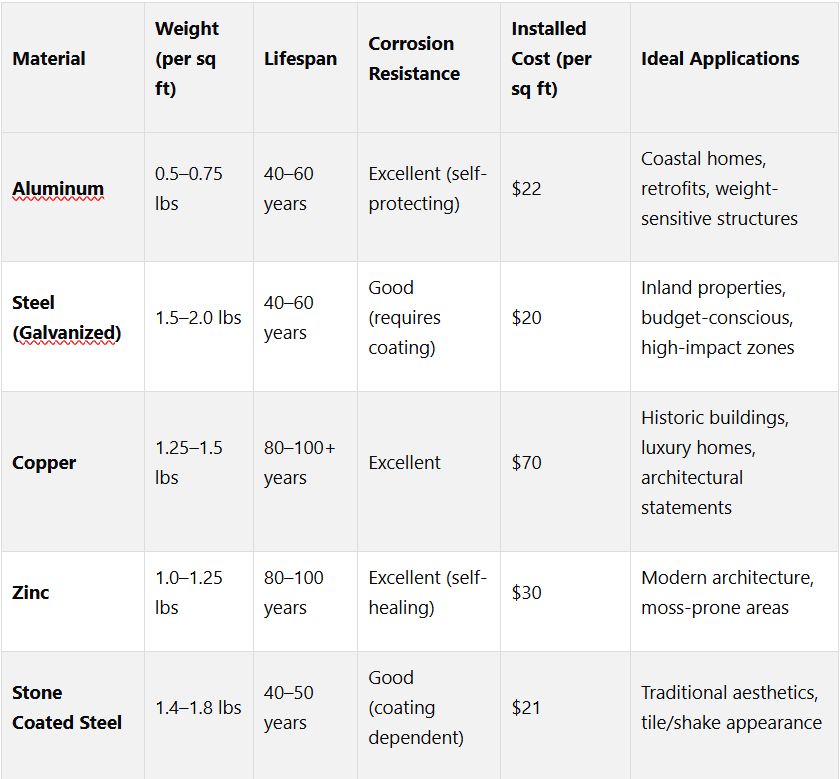 Copper and zinc stand out for their impressive lifespans - 80 to over 100 years. Copper, virtually maintenance-free, develops a unique green patina over time, adding character to historic and luxury properties. Zinc, on the other hand, naturally resists moss and algae due to its self-healing properties. While zinc costs approximately $30 per square foot, about 36% more than aluminum, its extended lifespan and reduced maintenance needs often justify the higher price.
"Aluminum's defining characteristic is its superior corrosion resistance, particularly in applications near oceans or large bodies of water - making it a common roofing choice in coastal homes, island developments, and tropical resort construction."
As noted by MetalStudy Forge, understanding material quality is key to choosing a roof that balances longevity with performance. These insights help homeowners make decisions that align with their priorities and environmental conditions.
Conclusion
The lifespan of a metal roof depends heavily on using high-quality materials and ensuring skilled installation. Materials like Galvalume®-coated steel or aluminum panels form the backbone of long-lasting protection. However, even the best materials can fall short without proper installation methods that address critical factors like thermal expansion, wind resistance, and moisture control. Together, these elements are key to durability and long-term savings.
Studies indicate that metal roofs can last anywhere from 40 to 80 years while also cutting energy costs by up to 40%. To achieve this kind of longevity, starting with the right components is essential. Using 300 series stainless steel fasteners, top-tier sealants, and advanced paint systems ensures the entire roofing system is built to withstand the test of time.
Equally important is the role of professional installers. For homeowners in the San Gabriel Valley, CAP Metal Build offers a winning combination of premium materials and certified installation practices. Their expertise in fastening techniques, component compatibility, and effective weatherproofing ensures your roof can achieve a lifespan of 50 to 70+ years.
When you factor in the benefits of high-quality materials and skilled installation, the upfront investment becomes a smart financial choice. For example, an average metal roof costing $11,000 for a 2,300-square-foot home significantly reduces the need for future replacements. Add in lower maintenance costs, energy savings, and fewer risks of premature failures, and it’s clear that investing in quality pays off with long-term performance and peace of mind.
FAQs
How do I choose the best metal roof material for my climate?
To choose the right metal roof material for your area, think about the local weather. For example, aluminum is a great option in coastal areas because it resists corrosion, while steel offers the strength needed to handle tough weather conditions. Picking the right material for your environment helps ensure your roof lasts longer and stays durable. CAP Metal Build provides top-notch materials specifically designed to handle the unique weather challenges of the San Gabriel Valley, CA.
What thickness (gauge) should I get for hail or heavy wind areas?
For regions that experience hail or strong winds, opting for a thicker metal roof - like 16 or 14 gauge - is a smart choice. These thicker gauges provide added durability and are better equipped to handle impacts and severe weather, ensuring your roof stays protected for the long haul.
How can I tell if a coating like PVDF or Galvalume is worth it?
Coatings such as PVDF and Galvalume are great options when it comes to durability and protection for metal roofs. PVDF is known for its strong resistance to UV rays and harsh weather, helping to maintain the roof's appearance while also extending its lifespan. On the other hand, Galvalume excels in corrosion resistance, offering an impressive lifespan of 40 to 60 years or more. Both options are designed to enhance the performance and longevity of your metal roofing system.