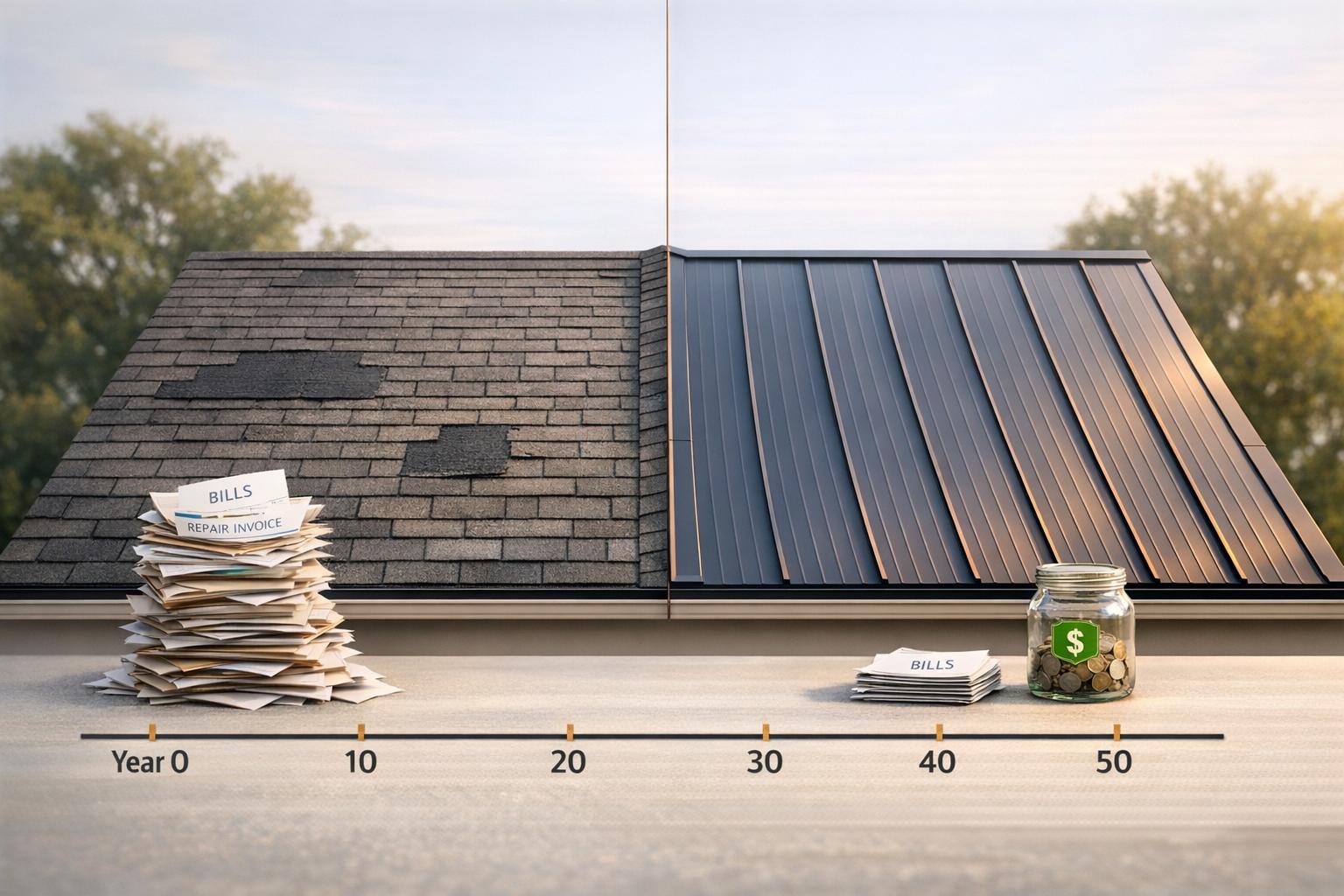
Choosing between metal roofing and asphalt shingles comes down to upfront costs, long-term savings, and durability. Here's what you need to know:
- Upfront Costs: Asphalt shingles are cheaper initially, costing $6,000–$12,000 for a 2,000 sq. ft. home. Metal roofing is pricier, at $18,000–$32,000.
- Longevity: Metal roofs last 40–70+ years, while asphalt shingles need replacing every 15–30 years.
- Maintenance: Asphalt shingles require more frequent upkeep and repairs, averaging $7,500–$15,000 over 50 years. Metal roofs are lower maintenance, costing $2,500–$5,000.
- Energy Efficiency: Metal roofs reflect heat, reducing cooling costs by 20%–40%. Asphalt shingles absorb heat, increasing energy bills in hot climates.
- 50-Year Costs: Over time, asphalt shingles cost $57,000–$100,000 due to replacements and maintenance. Metal roofing costs $23,000–$42,000, making it more cost-effective long-term.
For short-term affordability, asphalt shingles are ideal. For long-term savings and durability, metal roofing is the better choice.

Metal Roofing vs Asphalt Shingles 50-Year Cost Comparison
Upfront Installation Costs
When it comes to upfront costs, the numbers can vary quite a bit depending on the materials and labor involved. For materials alone, 3-tab asphalt shingles are priced between $0.70 and $2.00 per square foot, while architectural shingles cost slightly more, ranging from $1.00 to $3.00 per square foot. Metal roofing materials start at a higher price point, with galvanized steel costing $1.50 to $7.00 per square foot and aluminum ranging from $3.00 to $6.50 per square foot.
Labor costs also differ significantly. Installing asphalt shingles typically costs $2.00 to $3.50 per square foot, while metal roofing labor rates are much higher, between $5.00 and $12.00 per square foot. Installation times vary too - an asphalt roof usually takes 1 to 3 days to complete, whereas a metal roof installation can take anywhere from 3 to 7 days.
Additional expenses to consider include removing the old roof ($1,000 to $5,000), obtaining permits ($150 to $500), and purchasing underlayment. For metal roofs, high-performance synthetic underlayment costs $1 to $5 per square foot, compared to $1 to $3 per square foot for standard underlayment used with asphalt shingles. In some cases, structural reinforcements for metal roofs may add to the overall cost.
Here’s a closer look at the costs for each roofing option:
Asphalt Shingles
For a typical home in the San Gabriel Valley measuring 1,500 to 2,000 square feet, installing asphalt shingles usually costs between $5,700 and $12,000. The price depends on the type of shingles: 3-tab shingles are on the lower end, costing around $1.50 to $4.00 per square foot installed, while architectural shingles range from $2.00 to $6.00 per square foot installed. Asphalt shingles are a popular choice for homeowners on a budget or those planning to move within a few years due to their lower cost and quicker installation.
Metal Roofing
For the same 1,500 to 2,000 square foot home, metal roofing installation costs are significantly higher, ranging from $7,500 to $40,000. Costs vary depending on the type of metal roofing system. Exposed fastener systems are more affordable, costing $4.50 to $6.50 per square foot, while standing seam systems are more expensive, at $12.00 to $16.00 per square foot. Premium materials like copper can push costs even higher, reaching $15.00 to $50.00 per square foot. These higher costs reflect the durability of the materials and the specialized skills required for installation.
Installation Cost Comparison Table

The table includes materials, labor, and underlayment but excludes costs for old roof removal or structural modifications.
Next, we’ll take a closer look at how these upfront costs stack up against long-term maintenance expenses.
sbb-itb-e33e3b1
Maintenance and Repair Costs Over Time
When it comes to long-term costs, upkeep often reveals the full financial picture. Asphalt shingles tend to require more frequent attention, while metal roofing is known for its low-maintenance nature [24, 25]. Here’s a closer look at the specific tasks and expenses tied to each roofing option.
Asphalt Shingles Maintenance
Asphalt roofs demand regular checks - ideally once or twice a year and after severe weather - to catch issues like loose shingles or granule loss early [16, 24]. Common maintenance tasks include clearing gutters, removing algae or moss, and resealing flashing. In regions like the San Gabriel Valley, where temperatures can soar, asphalt shingles face additional challenges. Surface temperatures of 150°F–175°F from intense heat and UV exposure can cause cracking, curling, and granule loss, speeding up their deterioration [15, 17].
The cost of annual maintenance for asphalt roofs typically falls between $150 and $400, while repairs can average $975 per incident [16, 17]. Over a 50-year period, asphalt shingles often need to be replaced two or three times. This frequent replacement cycle contributes significantly to waste, with around 20 billion pounds of asphalt shingles ending up in U.S. landfills annually [12, 15, 16, 17].
Metal Roofing Maintenance
Metal roofs, on the other hand, require far less upkeep. Routine care usually involves clearing debris and inspecting fasteners and sealants, as temperature shifts can cause the metal to expand and contract [4, 24]. Rubber washers on screws, which may degrade from UV exposure, should be checked and replaced every 5 to 10 years to avoid leaks.
Annual maintenance costs for metal roofs range from $50 to $150, offering homeowners savings of $100 to $250 per year compared to asphalt [14, 17]. While repairs can be more specialized and average around $1,700 per incident, the durability of metal roofing is a major advantage. With lifespans ranging from 40 to over 70 years - and premium options like copper lasting even longer - metal roofs typically require only one installation over 50 years [15, 16, 17].
According to Western States Metal Roofing, "A metal roof is often referred to as a 'Lifetime Roof,' meaning you should only need to purchase one in your life for your house".
The table below highlights the key differences in maintenance costs and requirements for asphalt shingles versus metal roofing.
Maintenance Cost Comparison Table

Total Ownership Costs Over 50 Years
When you look at roofing over a 50-year period, factors like replacement cycles, inflation, and maintenance costs can significantly impact the total expense. Here's a breakdown of how asphalt shingles and metal roofing compare over that timeframe.
Asphalt Shingles Total Costs
Asphalt shingles generally last 15–30 years, meaning a 50-year span will require at least two or three replacements. For a 2,000-square-foot home, the initial installation costs range from $6,000 to $12,000, but future replacements could cost $20,000 to $30,000 each due to inflation and rising material and labor costs.
Over the decades, you should also expect to spend $7,500 to $15,000 on maintenance and repairs. Altogether, the total investment over 50 years adds up to $57,000 to $100,000. These figures highlight how recurring replacements and maintenance drive up the long-term cost of asphalt shingles.
According to Matthew Leid of Rockland Builders, "A single metal roof today - even if you finance it - can cost less over time than two full asphalt roof replacements".
Metal Roofing Total Costs
Metal roofing, with its impressive lifespan of 40–100+ years, typically requires just one installation within a 50-year period. That initial investment ranges from $18,000 to $32,000 for a 2,000-square-foot home, eliminating the need for costly replacements.
Maintenance expenses are minimal, usually falling between $2,500 and $5,000 over five decades. Beyond that, metal roofs can reduce cooling costs by 20% to 40%, which could save $300 to $600 annually. Additional savings come from insurance discounts of 10% to 15% and federal tax credits, which offer a 30% credit on qualifying materials, up to $1,200 annually. Combined, these benefits make metal roofing a much lighter financial commitment over time, with total costs ranging from $23,000 to $42,000.
50-Year Cost Comparison Table
The table below provides a side-by-side look at the 50-year costs for asphalt shingles and metal roofing.
 Data compiled from industry sources [4][7][9][11][17].
Energy Savings and Climate Considerations for San Gabriel Valley
The San Gabriel Valley's hot, sunny climate makes energy efficiency a key consideration when selecting roofing materials. With long summer months and high cooling demands, the way a roof handles solar heat can significantly influence energy costs and indoor comfort.
Metal Roofing Energy Efficiency
Metal roofs are known for their ability to reflect solar radiant heat. This reflective quality can keep the roof surface up to 100°F cooler compared to asphalt under the same conditions, and it can lower attic temperatures by as much as 35°F during peak summer months. These temperature reductions often translate into cooling cost savings of 25% to 50% for homeowners with metal roofs. Advanced coatings like Kynar 500® and other specialized finishes further boost reflectivity and energy performance.
"Metal roofs reflect the sun's heat away from a building, leading to energy savings of about 50 percent, and they can be about 100 degrees cooler on the surface than traditional asphalt roofs." - Midwest Roofing Contractors Association
The color of the metal also plays a role. White or light-colored metal surfaces typically achieve around 67% reflectivity, while darker panels maintain a Solar Reflectivity (SR) of about 0.30. In contrast, standard black asphalt shingles have an SR of just 0.05. This makes metal roofing a strong choice for reducing cooling demands in the San Gabriel Valley's intense heat.
Asphalt Shingles Energy Efficiency
Unlike metal, asphalt shingles absorb solar heat. Their petroleum-based composition acts as a thermal mass, trapping heat and transferring it into the home. Even after the sun sets, asphalt shingles continue to radiate warmth into the structure. For example, dark asphalt shingles reflect only about 22% of solar radiation, which can significantly increase air conditioning usage and energy bills in a climate like San Gabriel Valley's.
"Asphalt shingles absorb a lot of heat, and that heat doesn't stop at the roofline; it streams into the structure and raises indoor temperatures by 20°–25°F." - Florida Solar Energy Center
These differences in energy performance highlight the importance of choosing the right roofing material and ensuring proper installation to maximize energy savings.
CAP Metal Build's Local Installation Services
CAP Metal Build specializes in metal roofing installations tailored for the San Gabriel Valley. Their professional services focus on using reflective materials designed to withstand constant UV exposure while optimizing cooling benefits. They also assist homeowners in accessing federal tax credits and local utility rebates, helping to offset initial costs.
For those looking to lower long-term cooling expenses while investing in a roof with a lifespan of 40 to 100 years, CAP Metal Build provides solutions that balance energy efficiency and durability, all while addressing the unique demands of the local climate.
Conclusion: Choosing the Right Roof for Your Home
When deciding on roofing, think about your home's longevity and your personal priorities. Asphalt shingles are a more affordable option upfront, typically costing between $6,000 and $12,220. This makes them a good choice if you're working with a tight budget or planning to sell your home within the next decade. On the other hand, metal roofing comes with a higher initial price tag - ranging from $15,000 to $55,000 - but compensates for this with its durability and energy-saving benefits over time.
Looking at the big picture over 50 years, the long-term costs tell a different story. Asphalt shingles need to be replaced two or three times, bringing the total expense to about $57,000 to $60,000. A metal roof, installed just once, costs around $23,000 to $27,500. In areas like the San Gabriel Valley, where temperatures soar, metal roofs can cut cooling costs by as much as 40%, while asphalt shingles continue to absorb heat, adding to air conditioning expenses.
"For homeowners planning to stay long-term, metal roofs can make a lot of sense for them." - Todd Miller, President, Isaiah Industries
If you're planning to stay in your home for 15 years or more, metal roofing offers better long-term value. It requires fewer replacements, less maintenance, and delivers energy efficiency benefits. However, for those with short-term plans or tight budgets, asphalt shingles remain a practical and economical choice. These numbers highlight the importance of local expertise when balancing energy savings and durability. In the heat of the San Gabriel Valley, investing in metal roofing can lead to considerable energy savings over time. CAP Metal Build specializes in metal roofing installations tailored to this climate, helping homeowners take advantage of federal tax credits while ensuring lasting performance through expert installation.
Ultimately, your decision should reflect your timeline, budget, and climate considerations to ensure a smart and lasting investment.
FAQs
What are the long-term cost advantages of metal roofing compared to asphalt shingles?
Metal roofing comes with notable cost advantages over asphalt shingles when you look at the bigger picture. Sure, the upfront cost is higher - typically $8 to $12 per square foot compared to asphalt shingles at $3.50 to $5.50 per square foot. But here's the kicker: metal roofs last 40 to 70 years, while shingles often need replacing after just 15 to 30 years. That means fewer replacements and more money saved in the long run.
But the benefits don’t stop there. Metal roofs are tough - they resist cracking, curling, and even insect damage, which keeps maintenance needs to a minimum. Plus, they reflect solar heat, potentially cutting cooling costs by up to 40%. So, while the initial investment is higher, the combination of durability, low upkeep, and energy savings makes metal roofing a smart choice for long-term value.
Is metal roofing more energy-efficient than asphalt shingles in hot climates?
In regions with hot weather, metal roofing often outperforms asphalt shingles in energy efficiency. Metal roofs are designed to reflect a large portion of solar heat, which helps maintain cooler indoor temperatures and can lower air conditioning expenses. This reflective quality reduces the heat absorbed by the roof, making it a practical option for homes in warmer areas.
In contrast, asphalt shingles tend to soak up and retain heat, which can raise indoor temperatures and drive up energy costs. Opting for a metal roof can lead to noticeable energy savings and greater comfort during scorching weather, making it a worthwhile choice for homeowners in hot climates.
What are the key maintenance differences between metal roofs and asphalt shingles?
Metal roofs and asphalt shingles come with different levels of maintenance over the years.
Metal roofs are known for their durability and require very little upkeep. The occasional inspection and cleaning are usually enough, with repainting only needed if the finish starts to wear. They’re naturally resistant to issues like rot, insect damage, and warping. However, after severe storms, it’s worth checking for any loose or damaged panels to ensure everything is intact.
Asphalt shingles, however, need more frequent care. Over time, they can crack, curl, or lose granules, which could lead to leaks if not addressed quickly. In humid areas, moss or algae may grow on the surface, requiring cleaning or treatment to prevent further damage. While asphalt shingles are more vulnerable to wear, consistent maintenance can help them last longer.
In comparison, metal roofs offer a more low-maintenance solution with fewer long-term repair needs.