
5 Steps in Eco-Friendly Metal Roof Production
A metal roof can last 50 to 70 years, use high recycled content, and go back into the production cycle at the end of its life. That is the main reason many buyers look at metal when they want a roof with less waste and a longer service life.
If I boil this down, the process comes down to five steps:
- Use recycled metal first to cut energy use and mining
- Clean and treat the coil so coatings bond well
- Form panels with tight control to reduce scrap and rework
- Apply factory coatings to limit paint waste and extend roof life
- Return scrap to the mill and inspect panels before shipping
A few numbers stand out:
- Recycled aluminum can use just 5% of the energy needed for virgin aluminum
- Recycled steel can use about 26% of the energy needed for new steel
- Metal roofs often outlast three asphalt roofs
- Factory coating can use 95%+ of the paint
- Reflective finishes can cut cooling demand by 20% to 40%
If you want the short answer, lower-impact metal roofing starts with recycled feedstock and ends with tight quality control. Everything in between is about cutting waste, lowering energy use, and making the roof last longer.
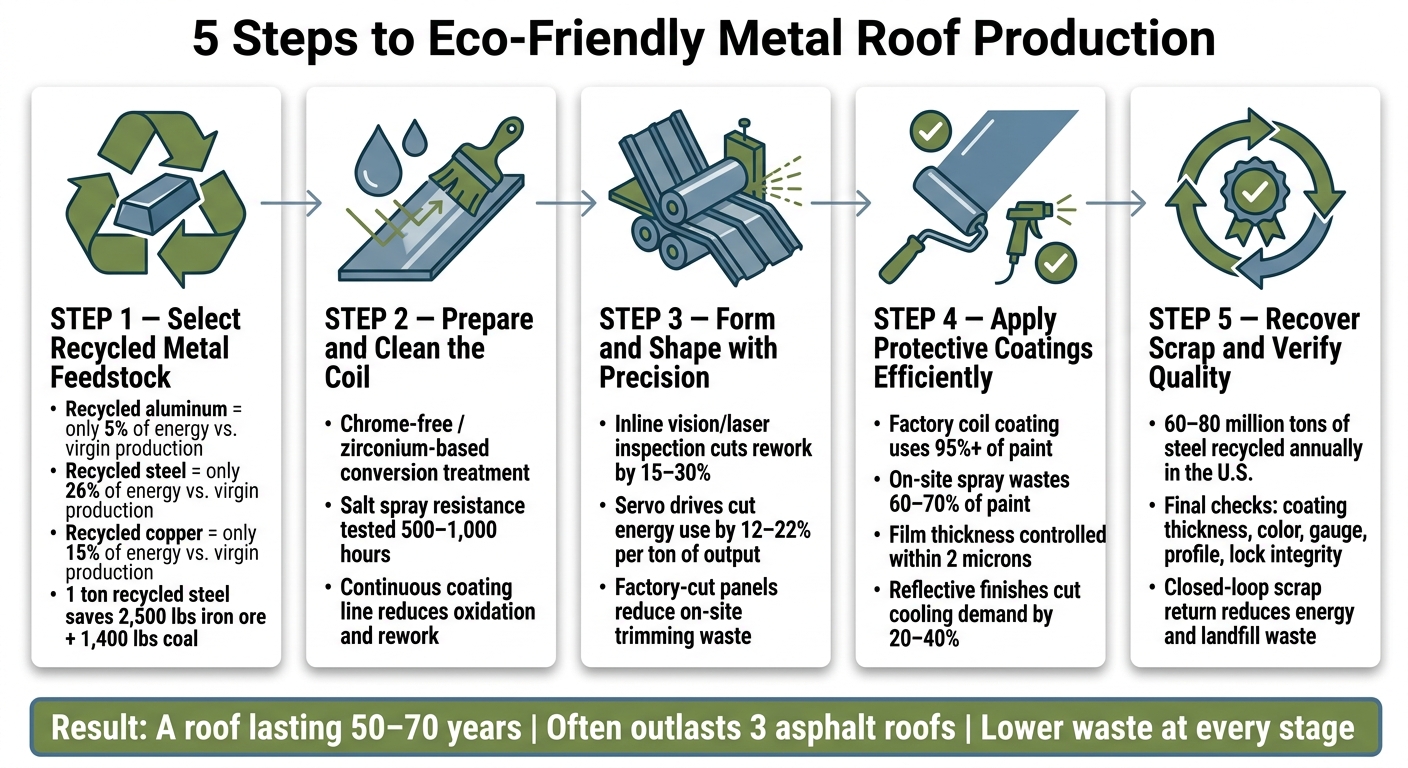
5 Steps to Eco-Friendly Metal Roof Production
1. Select Recycled Metal Feedstock
Choosing recycled feedstock cuts embodied carbon before fabrication starts.
The biggest drops come from aluminum and steel.
| Metal Type | Typical Recycled Content in Roofing | Energy Required vs. Virgin Production |
|---|---|---|
| Aluminum | ~85% | 5% |
| Steel | 25%–100% | 26% |
| Copper | ~75% | 15% |
The energy gap is hard to ignore. Recycled aluminum needs just 5% of the energy used for virgin production. Recycled steel comes in at 26%, and recycled copper at 15%.
There’s also the mining side of the equation. Every ton of recycled steel saves about 2,500 pounds of iron ore, 1,400 pounds of coal, and 120 pounds of limestone. Each ton of recycled aluminum avoids four tons of bauxite extraction.
Of course, recycled metal doesn’t go straight from the scrap pile to the roof panel. It still needs to be sorted, purified, and checked before it reaches the production line. Scrap is melted, refined, and tested so it meets roofing-grade purity standards. Manufacturers sort scrap into pre-consumer off-cuts and post-consumer waste. Post-consumer material does more to keep waste out of landfills.
The key point is simple: recycled metal still keeps the strength and performance needed for roofing.
Once the feedstock is selected, the next gain comes from cleaning the coil.
sbb-itb-e33e3b1
2. Prepare and Clean the Coil
After recycled feedstock is picked, the coil needs a full cleaning before forming. When recycled metal reaches the production line, it often still has oils, dirt, and residue from shipping that can get in the way of coating adhesion. The goal here is simple: remove that buildup so the coatings stick the way they should.
Modern lines usually rely on alkaline washing and mechanical brushing to clear away residue while using fewer harsh chemicals. After that, the coil goes through a chrome-free or zirconium-based conversion treatment that helps the primer and topcoat bond better.
The most efficient setups run this work on a continuous coating line. In plain English, the strip moves through cleaning, treatment, and priming in one automated pass. That matters because a continuous line cuts oxidation, keeps line conditions steady, and lowers rework. Factory-applied coatings also remove leftover paint, solvents, and chemical waste at the jobsite.
Before forming starts, manufacturers check that the coil is ready with standardized adhesion testing and salt spray resistance testing for 500 to 1,000 hours.
With the coil cleaned and treated, the next step is precise forming.
3. Form and Shape with Precision
After the coil is cleaned and treated, it moves into roll forming. That’s where flat metal turns into a finished panel profile. And this step matters more than it might seem at first glance. Precision affects energy use, scrap, and the life of the roof itself. In plain terms, better forming means less waste and panels that hold up longer.
Modern roll-forming lines use PLC controls and sensors to keep tolerances tight. That consistency is a big deal. Even small shifts in rib pitch or panel width can lead to defects, which then means rework or scrapped material. Inline vision and laser inspection systems help catch those issues early, cutting rework by 15–30%.
Energy use can also drop at this stage. Servo drives with regenerative braking recover energy during deceleration, instead of letting it go to waste. Compared with older hydraulic or mechanical systems, these drives can cut energy use by 12–22% per ton of output.
Waste stays lower when manufacturers use precise dies and in-line punches, since material loss is mostly limited to small punch-outs. Factory-cut panels sized to exact project lengths help too. They reduce on-site trimming waste and cut down on the need for overlapping seams. Careful cutting also leaves the panel ready for coating without extra rework.
Accurate forming also helps protect the coating before the panel moves to the next step.
4. Apply Protective Coatings Efficiently
After precision forming, the coating step helps the panel hold up over time without piling on extra waste. Once the panel is formed, the coating shields the roof and helps cut future maintenance. The goal is simple: protect the roof while keeping emissions and waste low.
Factory coil coating keeps film thickness within 2 microns across the coil. That kind of control is hard to match in the field. Pre-finishing also removes the need for on-site painting, which cuts VOCs and avoids weather-related delays.
There’s a big material-use gap too. Factory coil coating captures overspray and uses more than 95% of the paint, while on-site spray application wastes 60% to 70% of the material. That difference adds up fast, especially on large roofing jobs.
During curing, typically 390–480°F, VOCs from solvents are captured and incinerated. In efficient facilities, those curing emissions are captured, incinerated, and sometimes reused as process heat. Put plainly, the system deals with emissions where they start and can feed some of that heat back into production instead of letting it go to waste.
Oven-baked finishes are harder and more chemically resistant than field-applied paint. That means the roof can last longer and need less upkeep. Over the life of the roof, longer-lasting coatings can cut repainting, replacement, and material waste. Solar-reflective pigments can also trim cooling and heating costs by about $0.02 per square foot for each 0.10 increase in solar reflectance in warm climates.
Next, the process shifts to scrap recovery and final quality checks.
5. Recover Scrap and Verify Quality
After forming and coating, the last step is to collect leftover scrap and inspect each panel before it ships. These checks help cut waste and help the finished roof hold up over time.
Once coating is done, any metal off-cuts should go back into the production loop. In a closed-loop system, machine scrap is collected, bundled, and sent back to the mill so it can reenter production. That matters because it cuts energy use. And the scale is big: between 60 and 80 million tons of steel are recycled each year in the U.S. alone. Precision cutting also keeps scrap down by matching panels to job-specific lengths.
After scrap is recovered, the focus shifts to final inspection. Technicians check coating thickness, color, gauge, profile, and lock integrity before shipment. Those checks help each roof perform the way it's supposed to and cut down on rework, along with the extra transport tied to remakes.
Coating Options at a Glance
Once the panels are made, the finish has a big job: it helps the roof stand up to corrosion, UV exposure, and salt air. In practice, the coating you choose shapes corrosion performance, expected lifespan, and how smoothly production moves. This table gives you the fast comparison.
The main options are galvanized, Galvalume®, and painted finishes. Galvanized steel uses a zinc layer that wears away first to protect the steel below. Galvalume® uses a 55% aluminum / approximately 45% zinc alloy, so you get barrier protection along with sacrificial action. On sheet steel, that can mean up to 3x better rust resistance. Painted finishes add color plus UV and moisture protection. The main difference between PE, SMP, and PVDF comes down to how long they hold up.
| Coating Type | Durability | Corrosion Resistance | Manufacturing Impact | Best For |
|---|---|---|---|---|
| Galvanized (Zinc) | 10–20 years (unpainted) | High - sacrificial protection; self-heals at cut edges | Lower initial energy/cost | Inland, budget-conscious projects |
| Galvalume® (Al-Zn) | 60+ years | Superior - barrier + sacrificial; excels in salt air | 10–30% higher cost than galvanized; high heat reflectivity | Coastal, industrial, long-term projects |
| PVDF (Kynar 500®) | 20–25+ years | Excellent - UV and chemical resistant | 95%+ paint utilization; 70–80% less on-site painting time | Coastal, high-UV, premium aesthetics |
| SMP (Silicone Polyester) | 10–15 years | Moderate | Low waste; factory applied | Moderate climates; cost-performance balance |
| Polyester (PE) | 7–10 years | Low | Economical; factory applied | Interior use or temporary structures |
Conclusion
Put it all together, and these five steps make metal roofing a lower-waste, lower-energy product. Eco-friendly metal roof production comes down to a chain of choices: recycled feedstock, precise fabrication, efficient coating, and scrap recovery. Each step cuts energy use and waste while keeping material in circulation. That matters because the way a roof is made affects both its impact on the planet and how it performs over time.
For homeowners, that careful manufacturing process shows up where it counts: day-to-day performance. The result is a roof that can last 50 to 70 years and often outlast several asphalt roofs. On top of that, reflective finishes can cut cooling demand by 20% to 40%. Eco-friendly metal roof production works best when manufacturers reduce waste at each stage and make a roof built to last.
FAQs
How is recycled metal tested for roofing quality?
Recycled metal goes through a strict cleaning process during melting to remove impurities. That step helps the finished material deliver the same strength and performance you’d expect from virgin metal.
Once the roofing panels are made, manufacturers test them for coating thickness, color consistency, and structural strength. Some also run accelerated aging tests to mimic decades of wear from sun, rain, and changing weather.
Which roof coating lasts the longest?
In metal roof production, the longest-lasting option is usually a multi-layer protective system. That means a corrosion-resistant layer, such as zinc or aluminum-zinc, plus a primer that helps the coating stick, and a durable colored topcoat.
When this system is made the right way, it can help a metal roof keep its appearance and do its job for about 40 to 70 years with very little maintenance.
Do reflective metal roofs lower energy bills?
Yes. Reflective metal roofs can cut energy bills because they bounce sunlight away, take in less heat, and help keep attic temperatures down. That means your air conditioner doesn’t have to work as hard.
In hot areas like Southern California, cooling costs may drop by 20% to 40%. They can also help reduce the urban heat island effect.