Metal Fence vs Wood Fence: Which Lasts Longer?
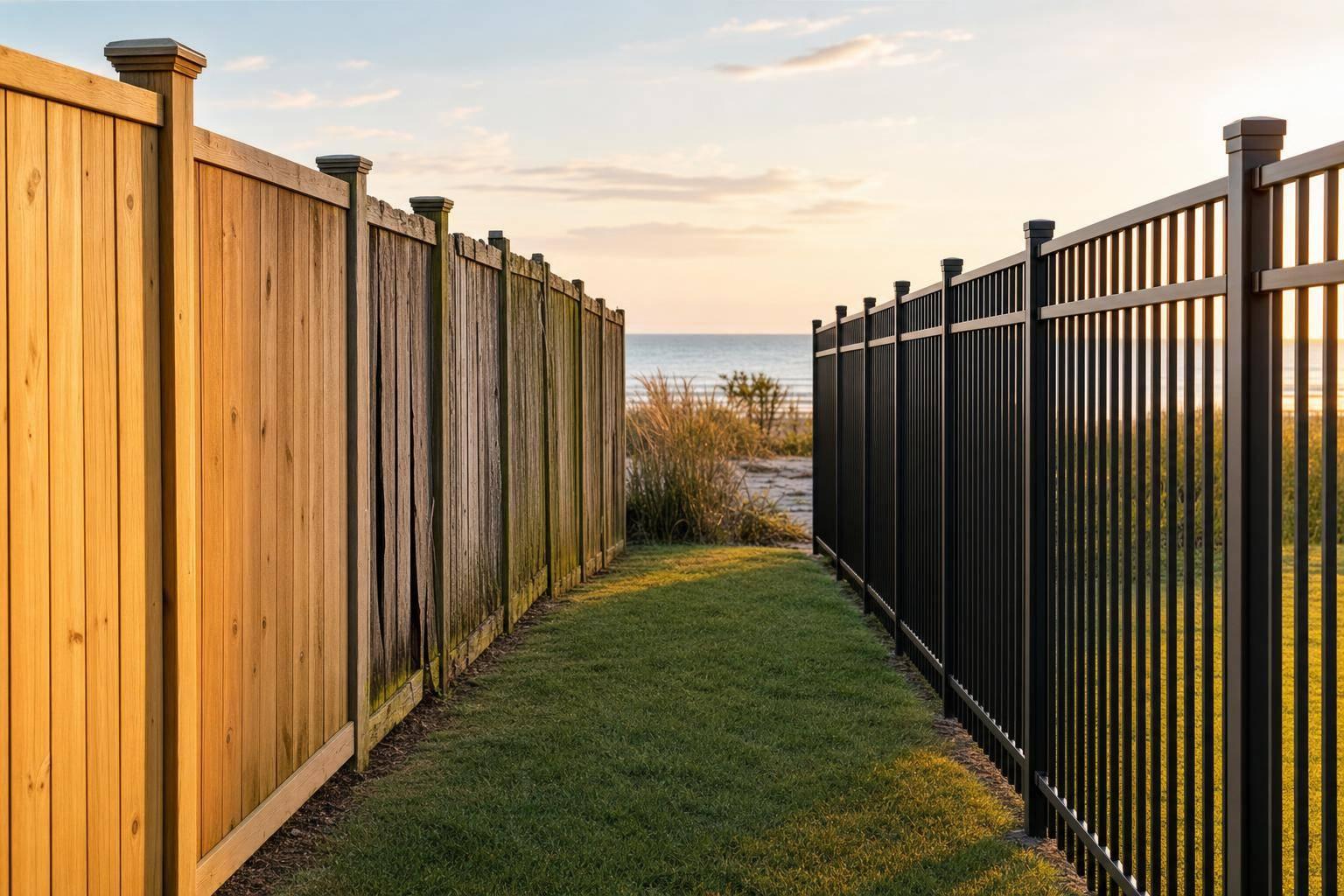
If you want the fence that usually lasts longer, metal is the safer bet. In most U.S. climates, metal fences often last 25 to 50+ years, while wood fences often last about 10 to 20 years.
If I cut this down to the key point, it’s simple:
- Aluminum, galvanized steel, and wrought iron usually outlast wood
- Cedar and redwood last longer than pressure-treated pine
- Wood costs less upfront, but it often needs more staining, sealing, and repairs
- Metal needs less upkeep and often costs less over a 20-year span
- In Los Angeles and the San Gabriel Valley, UV, termites, salt air, and fire rules can make metal the better long-term pick
This comparison looks at the six main fence materials homeowners usually weigh:
- Powder-coated aluminum
- Galvanized steel
- Wrought iron
- Western Red Cedar
- Redwood
- Pressure-treated pine
It also compares the parts that matter most when you’re spending money on a fence:
- Lifespan
- Weather resistance
- Rot, rust, and pest risk
- Maintenance
- Repair frequency
- Installed cost
- 20-year ownership cost
Quick Comparison
| Material | Typical Lifespan | Main Risk | Upkeep Level | Best Fit |
|---|---|---|---|---|
| Powder-coated aluminum | 30–50+ years | Chipped coating, dents | Low | Low-maintenance yards, coastal areas, fire-prone areas |
| Galvanized steel | 25–50+ years | Rust where coating fails | Low to medium | Strong metal fencing with routine checks |
| Wrought iron | 25–50+ years | Surface rust | Medium | Classic metal look if you don’t mind paint touch-ups |
| Cedar | 15–20 years | Rot, warping, fading | Medium to high | Wood look with better lifespan than pine |
| Redwood | 15–20 years | Rot, cracking, sun wear | Medium to high | Wood look in dry climates with upkeep |
| Pressure-treated pine | 10–15 years | Ground-line rot, termites | High | Lower upfront budget |
For cost, wood often starts around $25–$55 per linear foot installed, while aluminum often lands around $28–$55+ and wrought iron around $35–$55+. But over 20 years, wood can end up around $5,500–$10,000+ per 100 linear feet, while a similar metal fence may land closer to $4,500–$7,500.
So if you want the short answer: metal usually lasts longer, needs less work, and makes more sense over time. If you want the lower day-one price or a full-privacy wood look, wood can still fit.

Metal vs Wood Fence: Lifespan, Cost & Maintenance Compared
How Long Metal and Wood Fences Last
The gap between metal and wood shows up pretty fast when you look at service life and how each one tends to fail. Across aluminum, steel, wrought iron, cedar, redwood, and pressure-treated pine, the biggest difference comes down to moisture and structural decay. Put simply: each material handles weather, moisture, and impact in its own way.
Lifespan by Material
Wrought iron, galvanized steel, and powder-coated aluminum commonly last 25 to 50+ years. Aluminum holds up well against corrosion because it forms a protective oxide layer on its surface. That makes it a strong pick for coastal areas.
Cedar and redwood usually last 15 to 20 years with steady upkeep. Pressure-treated pine often lasts 10 to 15 years.
What Shortens or Extends Fence Life
With wood fences, the biggest weak spot is usually the posts. Wood posts often rot right at the ground line, and that single failure can take down a fence that still looks fine above ground. Using steel post systems helps cut down the ground-line failure point that often shortens wood fence life. Poor drainage also cuts years off both wood and metal fences.
For metal fences, the main trouble spots are coating damage and salt air. If the coating gets chipped or scratched, the exposed area can wear down much faster. Near salt air, aluminum is usually the best metal option because it resists corrosion well.
Lifespan, Climate Sensitivity, and Failure Points: Comparison Table
The table below gives a quick side-by-side look at lifespan and the most common failure points.
| Material | Typical Lifespan | Weather Sensitivity | Main Failure Points |
|---|---|---|---|
| Powder-Coated Aluminum | 30–50+ years | Low - excellent for coastal areas | Powder coat chipping, impact dents |
| Galvanized Steel | 25–50+ years | Moderate - rust if coating is breached | Corrosion at welds or scratches |
| Wrought Iron | 25–50+ years | Moderate - needs periodic touch-ups | Rust, surface oxidation |
| Cedar / Redwood | 15–20 years | High - UV and moisture sensitive | Rot, warping, fading |
| Pressure-Treated Pine | 10–15 years | High | Ground-line post rot, termites |
Next, the bigger issue is how those materials break down over time in sun, rain, pests, and impact.
sbb-itb-e33e3b1
What Affects Durability Over Time
How Metal Holds Up Against Rain, Sun, and Impact
Metal usually lasts longer because most of its weak spots start at the surface. Wood is different. Its weak spots often affect the structure itself. Metal doesn't rot, warp, or attract termites, which takes away three of the main reasons fences fail early. And when you compare how each material deals with sun, moisture, pests, and impact, the gap gets pretty clear.
Aluminum resists corrosion on its own. Steel and wrought iron need galvanization or powder coating, and once a scratch exposes bare metal, rust can start to form. Sun exposure mostly fades or chips the finish over time. But unlike wood, UV doesn't weaken the material itself.
Wood tends to fail for almost the opposite set of reasons.
How Wood Breaks Down Over Time
Unlike metal, wood has to deal with moisture, sun, insects, and ground contact all at once.
UV radiation breaks down lignin, the part of wood that holds its fibers together. That leads to surface graying, cracking, and fiber erosion. In Southern California, where the sun hits hard for much of the year, this happens faster than it does in milder places. Add moisture to the mix, and the damage speeds up. The repeated wet-dry cycle makes boards warp and split.
Termites stay active year-round in Southern California, and uncoated steel fasteners can rust near the coast. So even if the wood itself starts out solid, failed hardware can shorten the fence's lifespan.
Rot, Rust, Insects, and Weather Performance: Comparison Table
Here's how those failure patterns compare side by side.
| Durability Factor | Metal (Aluminum/Steel) | Wood (Cedar/Redwood) |
|---|---|---|
| Rot Resistance | Immune - does not decay | Low to moderate - vulnerable at ground contact |
| Insect Resistance | Immune - not a food source | Vulnerable to termites and carpenter ants |
| UV Performance | Coating may fade; structure unaffected | Causes cracking, graying, and fiber erosion |
| Moisture Response | Aluminum is stable; steel needs intact coating | Warps, splits, and shrinks over time |
| Coastal Performance | Excellent - especially powder-coated aluminum | Poor - salt accelerates finish failure in 1–2 years |
| Primary Failure Point | Coating damage, impact dents | Ground-line rot, termites |
Maintenance, Repairs, and 20-Year Cost
Routine Maintenance and Repair Frequency
Lifespan matters. But in day-to-day ownership, maintenance often has a bigger effect on what a fence actually costs.
That’s where the gap between metal and wood starts to show. In many cases, the difference isn’t just how long the material can last. It’s how much work it asks from you along the way, and what tends to go wrong when that work gets skipped.
Aluminum and powder-coated steel are pretty low-effort. Most of the time, an occasional rinse with a garden hose plus a yearly check of hinges, screws, and other hardware is enough. Wrought iron needs more attention than other metal options. It usually needs rust-blocking primer and paint touch-ups every 5 to 7 years. A residential aluminum fence may need only 1 to 2 hours of attention per year.
Wood takes more work. To help protect it from moisture, UV exposure, and insects, it usually needs staining or sealing every 1 to 3 years. Repairs also tend to show up sooner. Board replacement often starts around year 5 to 7, and rot at the base of posts is one of the most common reasons owners end up fixing sections of the fence.
Upfront Price vs. Lifetime Cost
A lower sticker price can look great at first. Over time, though, upkeep can change the math.
Installed cedar or redwood usually costs about $25–$55 per linear foot, while ornamental aluminum runs about $28–$55+ per linear foot and wrought iron about $35–$55+ per linear foot. If you want metal privacy panels, expect a higher range of about $45–$75 per linear foot.
Wood often wins on upfront price. But it also comes with yearly care costs of about $200–$600 for materials and labor. Metal fence upkeep is far lower, usually around $0–$50 per year.
Over a 20-year span, that gap adds up. For 100 linear feet, a wood fence can end up costing about $5,500–$10,000+ once you include staining, repairs, and likely partial or full replacement. A similar metal fence usually falls around $4,500–$7,500 as a one-time investment.
Installed Cost, Maintenance Cycle, and 20-Year Ownership Cost: Comparison Table
| Factor | Wood (Cedar/Redwood) | Metal (Aluminum/Wrought Iron) |
|---|---|---|
| Installed Cost (per linear foot) | $25–$55 | Aluminum: $28–$55+; wrought iron: $35–$55+ |
| Typical Maintenance Cycle | Stain/seal every 1–3 years | Occasional rinse; touch-ups as needed |
| Likely Repair Frequency | Board replacement starting year 5–7 | Very low; annual hardware check |
| Typical Replacement Timing | Within a 20-year window for most installations | Unlikely within 20 years; 30–50+ year service life |
| Approx. 20-Year Ownership Cost (100 linear feet) | $5,500–$10,000+ | $4,500–$7,500 |
Best Fence Choice for Los Angeles Homeowners
Once you factor in upkeep and lifetime cost, the local climate makes this choice a lot clearer.
When Metal Is the Better Long-Term Option
In Southern California, strong UV exposure, termite pressure, and wildfire risk push many homeowners toward metal as the better long-term pick.
Aluminum is non-combustible, which matters in Very High Fire Hazard Severity Zones. CAL FIRE warns that wood fences can act like wicks, carrying fire from vegetation or nearby structures straight to the home. Using non-combustible fencing in the 0–5 foot Zone 0 area helps cut off one of the most common ignition paths. And for coastal homes near the LA shoreline, powder-coated aluminum stands up to salt air better than steel.
When Wood Still Makes Sense
That said, wood still works well for some projects. If your main concern is the upfront price, or you want full privacy with no gaps, wood is still a solid option. It also fits homes where the goal is a warm, natural look that metal can't quite match.
Wood can also work as a short- to medium-term fix. Say you're planning a bigger landscape or hardscape project in the next few years and don't want to pay for a permanent fence yet. In that case, wood may be the right move for now. Another smart hybrid setup is to use metal fencing near the house for fire safety and low upkeep, then use wood or composite farther from the structure.
Conclusion: Metal Lasts Longer, but the Right Choice Depends on Budget and Upkeep
The tradeoff is simple: wood costs less upfront, while metal costs less over time. Metal tends to last longer. Wood usually needs replacement sooner.
For local homeowners, the choice often comes down to fire safety, upkeep, and budget. In Los Angeles and the San Gabriel Valley, metal usually gives homeowners the best long-term mix of durability, fire resistance, and low upkeep.
FAQs
Which fence is best for coastal homes?
For coastal homes, aluminum fences are usually the best pick. They hold up well against salt air and corrosion, which matters a lot near the water. A factory-applied powder coating adds another layer of protection, so aluminum tends to be a durable, low-maintenance option.
Wood fences, including cedar or redwood, can still work. But salt air can wear down the finish faster and may speed up decay over time. Steel is strong, but it may need extra protective coatings as the years go by.
Can a wood fence last longer with steel posts?
Yes. A wood fence can last longer with steel posts.
Using galvanized steel posts can extend a fence’s lifespan to 15–20 years or more, compared with the typical 10–20 years for wood fences built with wood posts.
Why? Steel posts hold up better where fences usually fail first: at ground level. They resist ground moisture, rot, and insect damage, which can cut down on maintenance and help prevent early failure.
Is metal or wood better for privacy?
For privacy, wood fences can give you full coverage when they use solid panels. But time can be tough on wood. It can shrink, warp, or take damage, which may leave gaps and cut into that sense of seclusion.
Metal fences with solid privacy panels usually keep their shape better. They also stand up to weather, pests, and rot, so they tend to maintain privacy longer and need less upkeep.