
How Roof Design Affects Noise Levels
When it comes to reducing noise in your home, your roof plays a bigger role than you might think. The design, materials, and structure of your roof can either amplify or minimize sounds like traffic, rain, or hail. Here's what you need to know:
- Noise Types: Roofs deal with two types of noise - airborne (traffic, airplanes) and impact (rain, hail).
- Material Matters: Modern metal roofs, when installed with proper decking and underlayment, can be almost as quiet as asphalt shingles.
- Shape and Slope: Steeper roofs deflect sound better than flat or low-slope designs.
- Insulation: Dense attic insulation and sealed gaps reduce noise significantly.
- Installation Quality: Solid decking, premium underlayment, and concealed fasteners are key to a quieter roof.
In places like the San Gabriel Valley, where noise from highways and flight paths is constant, these strategies can make your home much quieter. Properly designed roofs not only block sound but also handle weather better and improve energy efficiency.
Roof Noise Basics and Metal Roofing Acoustics
Types of Roof Noise and How Sound Travels
Roof noise comes in two main forms: airborne and impact noise. Airborne noise, like voices or music, travels through the air and weakens when it encounters dense, layered materials. Impact noise, on the other hand, is caused by physical contact - think rain or hail hitting the roof. This type of noise makes the structure vibrate, transmitting sound through the framing and ceiling instead of the air.
But sound doesn’t always play by the rules. It can bypass insulation entirely through what are known as flanking paths. These are gaps around features like ductwork, ceiling plenums, or structural connections. Sealing these openings is just as important as upgrading the roofing materials themselves. Understanding these basics helps explain how modern metal roofs manage to keep things quieter.
How Metal Roofs Handle Sound
Metal roofs often get a bad rap for being noisy, but that reputation mostly stems from outdated installations. When bare metal panels are installed on open framing, they act like a drumhead, with the air cavity below amplifying the sound of every raindrop.
"The 'loud metal roof' reputation mostly comes from old barn-style installations, open framing, under-insulated structures, and outdated assumptions - not a properly built residential metal roof." - Marva Roofing
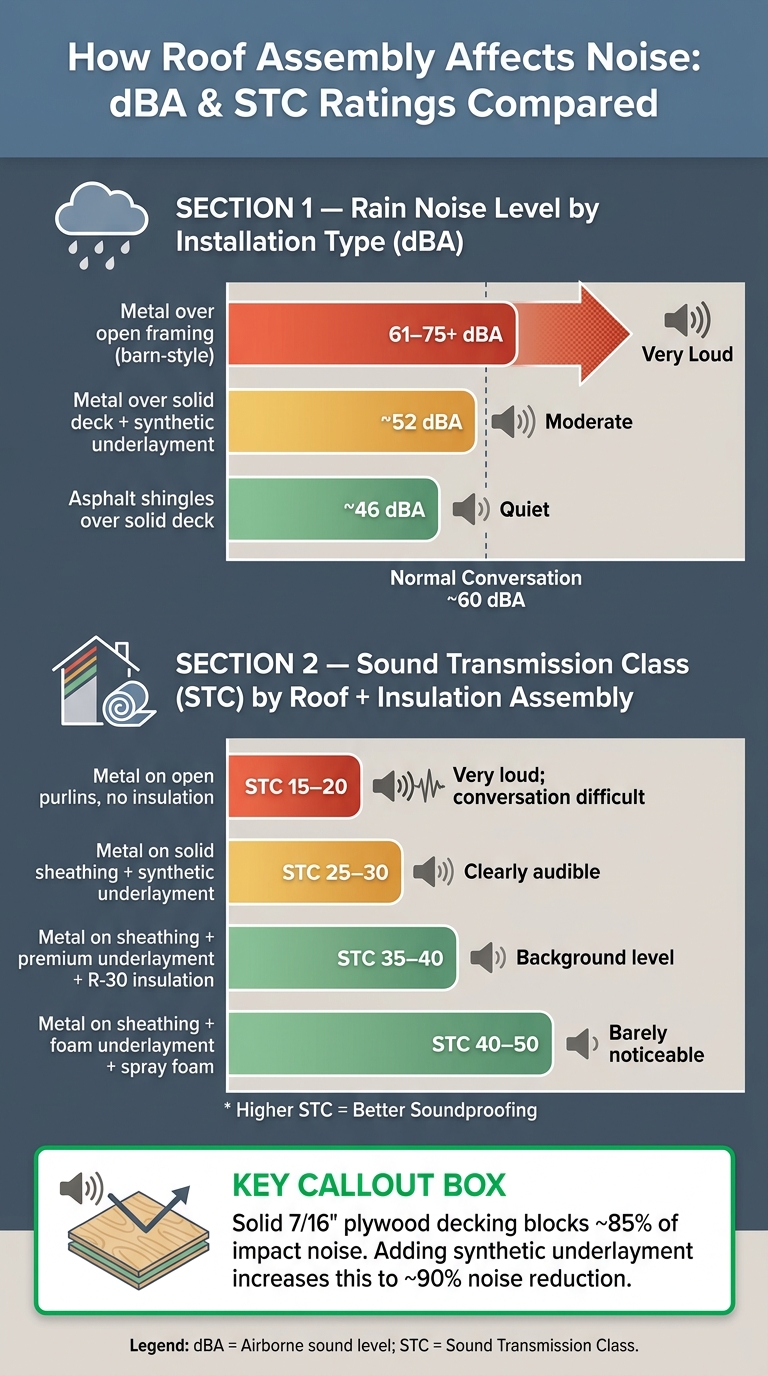
Modern metal roofing systems are a whole different story. Here’s a quick look at how installation methods influence noise levels during heavy rain:
| Installation Type | Rain Noise Level (dBA) |
|---|---|
| Metal over open framing (barn-style) | 61–75+ dBA |
| Metal over solid deck + synthetic underlayment | ~52 dBA |
| Asphalt shingles over solid deck | ~46 dBA |
| Normal conversation | ~60 dBA |
When installed over a solid plywood or OSB deck with quality underlayment, metal roofs typically produce around 52 dBA during a downpour. That’s only about 6 dB louder than asphalt shingles, making the difference less dramatic than many assume.
The type of metal panel and its thickness also influence sound performance. Thicker panels, like 24-gauge steel, are sturdier and vibrate less compared to thinner 29-gauge options. Standing seam profiles, which sit flush against the deck and use concealed fasteners, further reduce vibration compared to corrugated designs. For even better noise control, stone-coated metal panels are a great choice. Their textured, granular surfaces scatter sound waves, much like how carpet absorbs sound better than a bare floor.
"The thicker the coating and the more irregular the surface texture, the more effective a roof is at disrupting and dampening the reverberation of sound waves." - Trevor Underwood, DECRA
sbb-itb-e33e3b1
Roof Design Choices That Increase Noise
Roof Shape, Slope, and Surface Area
The shape of your roof plays a big role in how much noise makes its way inside. Flat or low-slope roofs are especially prone to amplifying noise because rain and hail strike them at nearly a 90-degree angle. This direct impact sends more energy through the roof deck. On the other hand, steeper roof slopes deflect the angle of impact, which helps reduce the sound that filters into your home.
Large, uninterrupted roof surfaces also contribute to noise issues. These wide, smooth planes fail to scatter sound waves, allowing noise to travel more easily.
"A flat, uncoated sheet of metal - like the smooth surface of a drum - has no way to shorten the prolonged sound reflection, known as reverberation." - Trevor Underwood, DECRA Roofing Systems
Another factor is the spacing between roof supports. When there are wide gaps, the roof structure becomes less rigid, making it more likely to flex and vibrate during storms.
Weak Decking and Underlayment
The materials beneath the metal panels are just as critical as the roof's shape when it comes to noise control. If the metal is installed over open rafters or spaced sheathing (commonly called "skip" sheathing), the panels vibrate more freely. This setup creates an air gap that acts like a resonance chamber, amplifying noise by as much as 15 to 25 decibels compared to a roof with a solid base.
"Without proper support, the metal vibrates excessively, escalating the noise impact beyond that of a well-integrated assembly." - Peak Performance Roofing
A solid foundation helps. Using ½-inch or ⅝-inch plywood or OSB decking paired with quality synthetic underlayment can cut impact noise by up to 90%. In contrast, thin felt underlayment falls short in dampening noise compared to rubberized or laminated alternatives.
Poor Attic Insulation
Even with sturdy decking and underlayment, a poorly insulated attic can let noise seep through. An empty or minimally insulated attic acts like an echo chamber, reflecting sound until it reaches your living space.
Standard fiberglass batts absorb some noise but often leave gaps, especially in irregularly shaped spaces. Blown-in cellulose, which is denser and molds to the attic's contours, does a better job of capturing sound across a wider range of frequencies . However, any unsealed gaps around ductwork or ceiling fixtures can still serve as entry points for noise .
To effectively block sound, insulation needs to be dense, properly installed, and paired with airtight sealing. Neglecting any of these elements creates weak spots where noise can sneak through. Fortunately, these issues can be addressed with thoughtful design changes, which will be explored in the next section.
Roof Design Solutions That Cut Noise
Metal Roof Noise Levels by Installation Type & Assembly (dBA vs STC)
Choosing the Right Roof Shape and Layout
A steeper roof pitch can make a home noticeably quieter, especially during rain or hailstorms. Fleming Construction Group explains:
"When it rains or hails, roofs with a steep pitch are less noisy than flatter roofs. (The hail or raindrops glance off the steeper roof, whereas they hit a flat roof directly.)"
In addition to roof pitch, the type of roof panels also plays a critical role in noise control. Standing seam metal roofs are particularly effective at reducing sound. Their raised seams break up sound wave patterns, while concealed fasteners reduce vibration points across the roof.
While the roof’s shape and panel style lay the groundwork for sound reduction, the materials beneath the surface take noise mitigation to the next level.
Better Decking and Underlayment Options
The roof deck is the first line of defense against noise. Using solid plywood or OSB decking that's at least ½ inch thick can significantly dampen impact sounds. First Choice Roofing Atlanta highlights this benefit:
"Solid 7/16″ plywood decking stops approximately 85% of impact noise before it reaches your living space. Adding synthetic underlayment increases this to about 90% noise reduction."
Underlayment acts as a sound buffer between the metal panels and the wood deck. Upgrading to a peel-and-stick modified bitumen underlayment (40–60 mils thick) can reduce sound transmission by an additional 5–10 dB compared to standard felt or synthetic options. To further limit noise caused by thermal expansion, concealed floating clips can be used.
Improving Attic Insulation and Ceiling Design
Once the roof deck and underlayment are optimized, the next step is enhancing attic insulation. R-38 to R-49 insulation, such as blown-in cellulose or spray foam, is highly effective at filling irregular gaps that fiberglass batts might leave behind. This helps block a broader range of sound frequencies.
For maximum noise reduction, a decoupled ceiling assembly can make a big difference. By installing resilient channels or sound isolation clips between the roof joists and ceiling panels, this setup creates a physical barrier that prevents sound vibrations from traveling through. Adding an extra layer of drywall increases the ceiling’s mass, further improving its Sound Transmission Class (STC). The table below highlights how different roof and insulation combinations compare:
| Assembly | Estimated STC | Rain Noise Experience |
|---|---|---|
| Metal on open purlins, no insulation | 15–20 | Very loud; conversation difficult |
| Metal on solid sheathing + synthetic underlayment | 25–30 | Clearly audible |
| Metal on sheathing + premium underlayment + R-30 insulation | 35–40 | Background level |
| Metal on sheathing + foam underlayment + spray foam | 40–50 | Barely noticeable |
(Higher STC ratings mean better soundproofing [8])
Finally, sealing any gaps in the ceiling is essential. Openings around ductwork, light fixtures, and other penetrations can allow sound to bypass even the best insulation. Using acoustical caulk or foam to seal these areas ensures the entire system works as intended. Together, these roof design strategies form a comprehensive approach to reducing noise intrusion.
Quiet Metal Roofs for San Gabriel Valley Homes
Noise and Weather Conditions in the San Gabriel Valley
The San Gabriel Valley presents unique challenges when it comes to roofing, thanks to its environment. Urban noise from freeways, airports, and densely packed neighborhoods creates a constant backdrop of sound. On top of that, the area's weather brings seasonal heavy rain and strong winds, which can amplify rooftop noise. Metal roofs, if not installed correctly, can also creak or pop due to thermal expansion caused by extreme heat. These combined factors make it essential to use roofing solutions that address both noise and energy concerns.
Combining Metal Roofing with Insulation and Solar
A well-thought-out metal roof in the San Gabriel Valley does more than just reduce noise - it tackles multiple issues simultaneously. Metal roofing reflects solar heat, which can lower cooling costs in the summer by as much as 25%. When paired with solid decking, high-quality underlayment, and blown-in attic insulation, it keeps rain noise at a manageable 52 dB - just slightly above the sound of normal conversation.
Another advantage is its compatibility with solar panels. Metal roofs, particularly those with standing seam profiles, make it easy to install solar panels without compromising the roof's surface. Solar mounting hardware attaches directly to the raised seams, eliminating the need for penetrations that could lead to leaks, while also maintaining the roof’s acoustic properties.
CAP Metal Build's Approach to Noise-Reducing Roofs
CAP Metal Build, a trusted name in the San Gabriel Valley since 2017 with an A+ BBB rating, takes a meticulous approach to creating quieter roofs.
"We are roofers first - not sheet metal workers trying to become roofers. Our team understands roofing systems from the deck up: ventilation, waterproofing, flashing, structural integration, and the details that determine whether a roof performs beautifully for generations or slowly fails over time." - CAP Metal Build
This roofing-first mindset ensures that every component - decking, underlayment, insulation, and panel profiles - is chosen and installed with the entire system's performance in mind. For homes in the San Gabriel Valley, CAP Metal Build uses standing seam systems with concealed fasteners, which minimize thermal expansion noise and reduce vibrations across the roof. They also pay close attention to gutter systems, ensuring heavy rain is effectively channeled away. These thoughtful, integrated strategies result in roofs that are not only quieter but also more energy-efficient and durable for the long term.
Conclusion: Getting a Quieter Home Through Better Roof Design
Creating a quieter home starts with an integrated roof system. This includes solid decking, high-quality underlayment, dense attic insulation, and well-designed panels. When these elements work together, metal roofs can achieve noise levels lower than a typical conversation. For example, a sturdy 7/16" plywood deck can block about 85% of impact noise before it even reaches your living space. Adding top-tier synthetic underlayment pushes that noise reduction up to around 90%.
The misconception that metal roofs are inherently noisy often comes from agricultural structures with open-frame designs - not properly constructed residential roofs. In urban areas like the San Gabriel Valley, where external noise from freeways, weather, and other factors is a constant challenge, these design principles are even more critical.
"The solid decking beneath any roof system is the primary factor in noise reduction, not the outer material itself." - First Choice Roofing Atlanta
For San Gabriel Valley homeowners, addressing noise issues starts with thoughtful planning and design. A well-constructed roof not only tackles noise but also stands up to seasonal rain, freeway sounds, and intense summer heat, offering decades of durability instead of daily frustration.
CAP Metal Build takes this systems-based approach seriously. With an A+ BBB rating and a proven track record since 2017, their philosophy - "Roofing is not just construction. It is stewardship." - guides every project. By ensuring all components, from the deck to the insulation, work together seamlessly, they deliver roofs built for longevity and peace of mind.
FAQs
Will a metal roof be loud in heavy rain?
No, a modern metal roof that's properly installed isn’t loud during heavy rain. The idea that metal roofs are noisy comes from older setups, like those on barns or sheds, which lacked insulation. Today, with solid roof decking, synthetic underlayment, and good attic insulation, the noise is significantly reduced. In fact, studies indicate the difference in sound between metal roofs and asphalt shingles is only about 6 dB - so minimal that most people wouldn’t even notice it.
What roof features make outside noise worse?
Roof noise is often tied to design decisions rather than the metal material itself. For instance, when metal panels are installed over open framing without a solid deck, there’s no buffer to absorb vibrations, which amplifies noise. Other factors include using thin-gauge panels, inadequate insulation or underlayment, loose fasteners, and hollow roof spaces that allow sound waves to echo and intensify. CAP Metal Build takes these elements into account to create quieter roofing solutions.
What’s the fastest way to quiet an existing roof?
To cut down on roof noise fast, focus on improving the interior setup. Start by adding sound-absorbing materials such as mineral wool or fiberglass batts in your attic or ceiling. If you can access the underside of the roof deck, applying vibration-damping mats or compounds can help reduce noise from vibrations. Another quick fix is to check and tighten fasteners and seals to minimize rattling. For an even quicker solution, bring in heavy drapes, rugs, or upholstered furniture to help absorb sound within your home.